Structural Steel Erection in Brownsville and the Port
Steel can reach a Brownsville jobsite by ship, by rail or by truck, and that choice is one of the few real advantages a port town gives an erector. The Port of Brownsville channel was deepened, according to FreightWaves in June 2026, from 42 to 52 feet on the main navigation route, and the port is served by short-line rail that connects with three Class I railroads. For an owner, that means structural steel for a large building does not have to arrive only on a flatbed from far away.
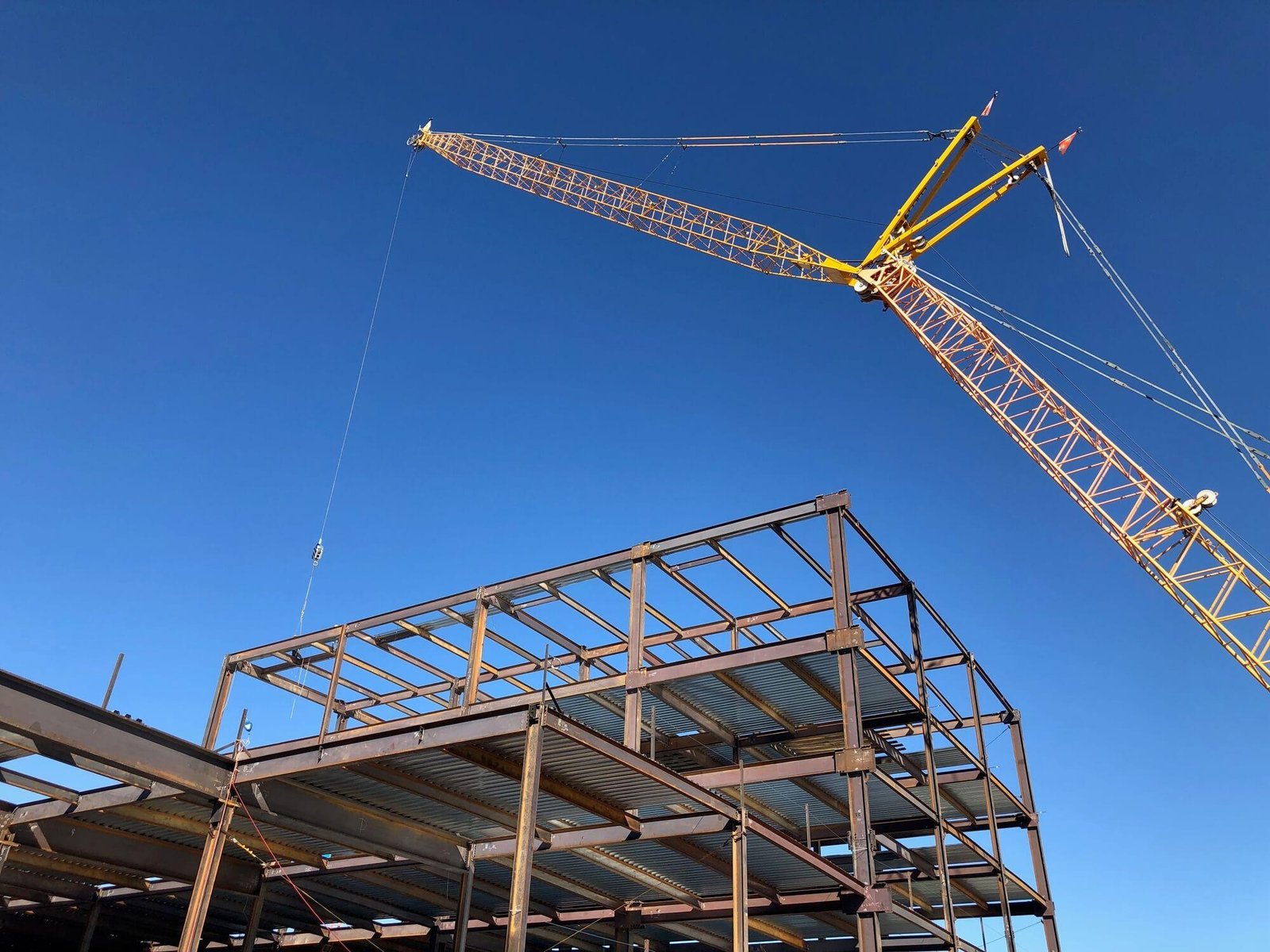
Erection is where all that logistics comes down to a crew, a crane and a set of bolts. We erect structural steel for commercial, industrial and institutional buildings, setting columns on prepared foundations, plumbing and bolting the frame, placing joists and deck, and handing the frame to the next trades in a condition they can build on. The work is dangerous when it is rushed and efficient when it is planned, so we spend our energy on the plan.
This page describes how we do it, what coastal conditions change and what an owner should expect to see.
From shop drawings to a plumb frame
Good erection begins in the office. We review the shop drawings against the architectural and foundation plans, check anchor bolt layouts before concrete is poured, and flag clashes between steel, mechanical openings and the roof drainage. A column that lands six inches off its bolts costs days, so we survey the bolts and base plates before the first piece arrives.
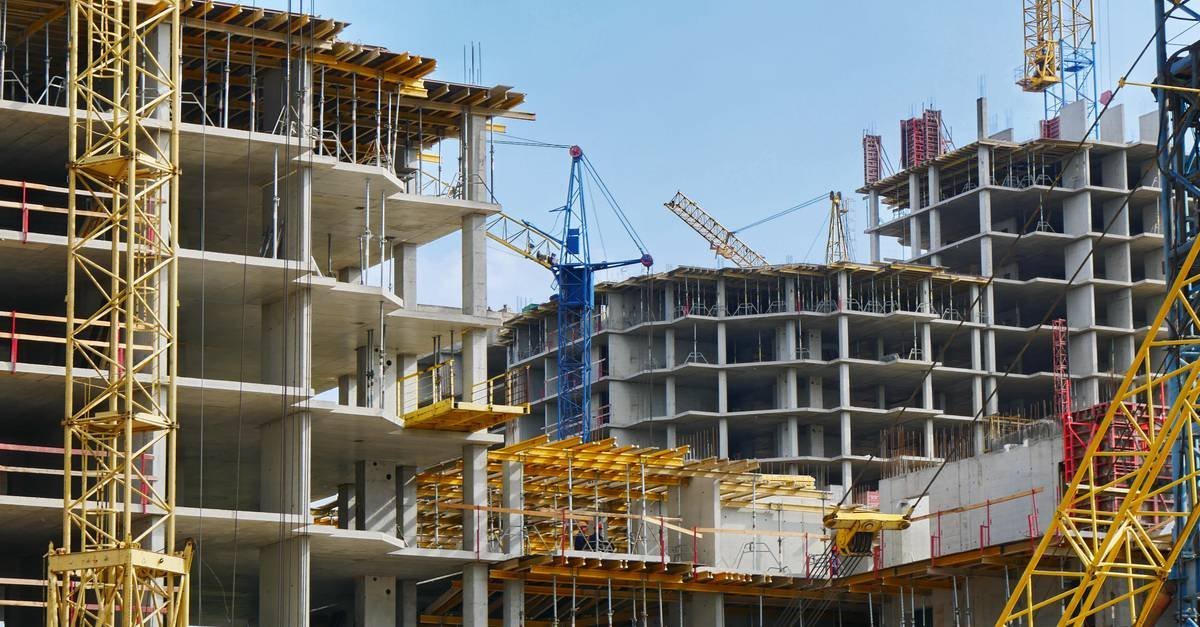
On site, the sequence is simple in principle: set columns, install beams and girders, plumb and align the frame, then place joists and deck. In practice, we plan every pick, match crane capacity and reach to the heaviest piece, and set up lay-down areas that keep material off wet clay. Each connection is torqued or welded and inspected before the frame is released to the roofers, and we record the results so they can be handed over with the project closeout.
Special inspections are part of the rhythm. The engineer of record or a third-party inspector checks bolt tension, weld quality and member alignment, and we schedule our work so that inspectors can see each connection before it is covered by deck, fireproofing or finishes. If something fails, we correct it while the lift equipment is still on site, which is far cheaper than coming back later. The result is a frame the owner can trust and a paper trail that the building official, the insurer and a future buyer can read.
Working at height in coastal wind
Erection puts people at height with heavy loads moving overhead, and the Gulf coast adds wind to the mix. The National Weather Service reported that Hurricane Hanna's EF0 tornado east-southeast of Brownsville blew windows out of an airport hangar, and that many poorly built structures were damaged across Cameron County, mainly roofs. A partially erected frame is the most vulnerable structure on any site, because it has no walls to brace it and no deck to tie it together.
We set wind limits for lifting, install temporary bracing as the frame goes up and secure loose material at the end of each shift. Fall protection, controlled decking zones and rigging inspections are standard on our jobs, and every crew member attends a daily briefing. The construction trade partners speak English and Spanish, so instructions on the ground are understood the first time. The same bracing discipline matters even more on the long open spans of an aircraft hangar frame, where a half-finished structure has very little to resist the wind.
What the ground and the weather do to a steel schedule
Foundations decide when steel can start. Clay soil needs time to be prepared, footings need to cure to strength, and base plates must be set accurately in concrete that has to be placed in suitable weather. If rain delays the concrete, the steel crew waits, and the crane rental continues to run. We coordinate our concrete foundations work and the erection schedule so that the frame can begin as soon as the first bay of footings is ready.
Crane access is the second issue. A heavy crane on soft ground can sink, tilt or become stuck. We build compacted crane pads and temporary roads where needed and keep an eye on the forecast for rain. Larger lifts use mats to spread the load, and a lift plan is written for any pick that approaches the capacity of the crane. Our approach to crane buildings uses the same planning discipline.
How we manage steel erection and related systems
We erect structural steel for projects where the frame is a major part of the work, including industrial buildings, canopies, mezzanines, equipment platforms and the support steel for roofs and rooftop units. We also set miscellaneous metals such as stairs, rails and ladders. Fabrication happens at an outside shop, and we manage the relationship, the shop drawings and the delivery schedule.
For larger projects, the steel frame is combined with other systems. A tilt-wall construction package may use steel joists, deck and interior framing, and a pre-engineered metal building arrives as a kit that the construction trade partners assemble. Knowing how each system works lets us give owners an honest comparison.
Steel pricing, lead time and the cost of delay
Steel prices move with the market, and fabrication lead times vary with the shop's workload. We obtain current pricing during preconstruction, hold it as long as the supplier allows and tell the owner when it is time to release the order. The Port of Port Isabel describes 726 acres of waterfront land with offshore-focused tenants and a project depth of 36 feet, which points to marine-oriented industry along this coast that may compete for the same steel trades.
Delay is expensive. A crane that stands idle, a crew waiting on a late delivery or a roofer who cannot start are costs that rarely appear in the original price. Early shop drawings, accurate bolt layouts and a realistic delivery schedule are the best protections. That is also why many of our manufacturing owners ask us to join the project during design.
Send us the drawings
Share the structural drawings or the concept, and we will return a plan for the pick sequence, the crane, the crew and the schedule.
Questions Owners Ask
Who is responsible for the anchor bolts?
The concrete crew sets them and our team surveys them before steel arrives. If a bolt is out of tolerance, it is much cheaper to correct it before the first column is set.
Can you erect steel during hurricane season?
Yes, with a plan. We watch forecasts, secure the frame and the material before storms, and pause lifts when wind limits are reached. The schedule carries weather allowances.
Do you handle shop drawing review?
We review them for conflicts with other trades and with the foundation, and we coordinate questions with the engineer and the fabricator so approvals do not stall the project.
How do you handle crane access on clay?
We build compacted pads or use mats, and we plan routes so the crane does not travel across soft ground. A wet forecast changes the plan, and we adjust the sequence.
Can you erect steel for a building you did not construct?
Sometimes. We look at the drawings, the schedule and the interface with the other trades before agreeing. The quality of the foundation and bolt layout matters a great deal.
Related
Related Services
Related Building Types
Ready to talk about your project?
Request a Project ReviewPlanning a build in Brownsville or Cameron County?
Share the site, the building and the schedule. We will walk the drainage, soils and permit path with you and follow up with next steps.