
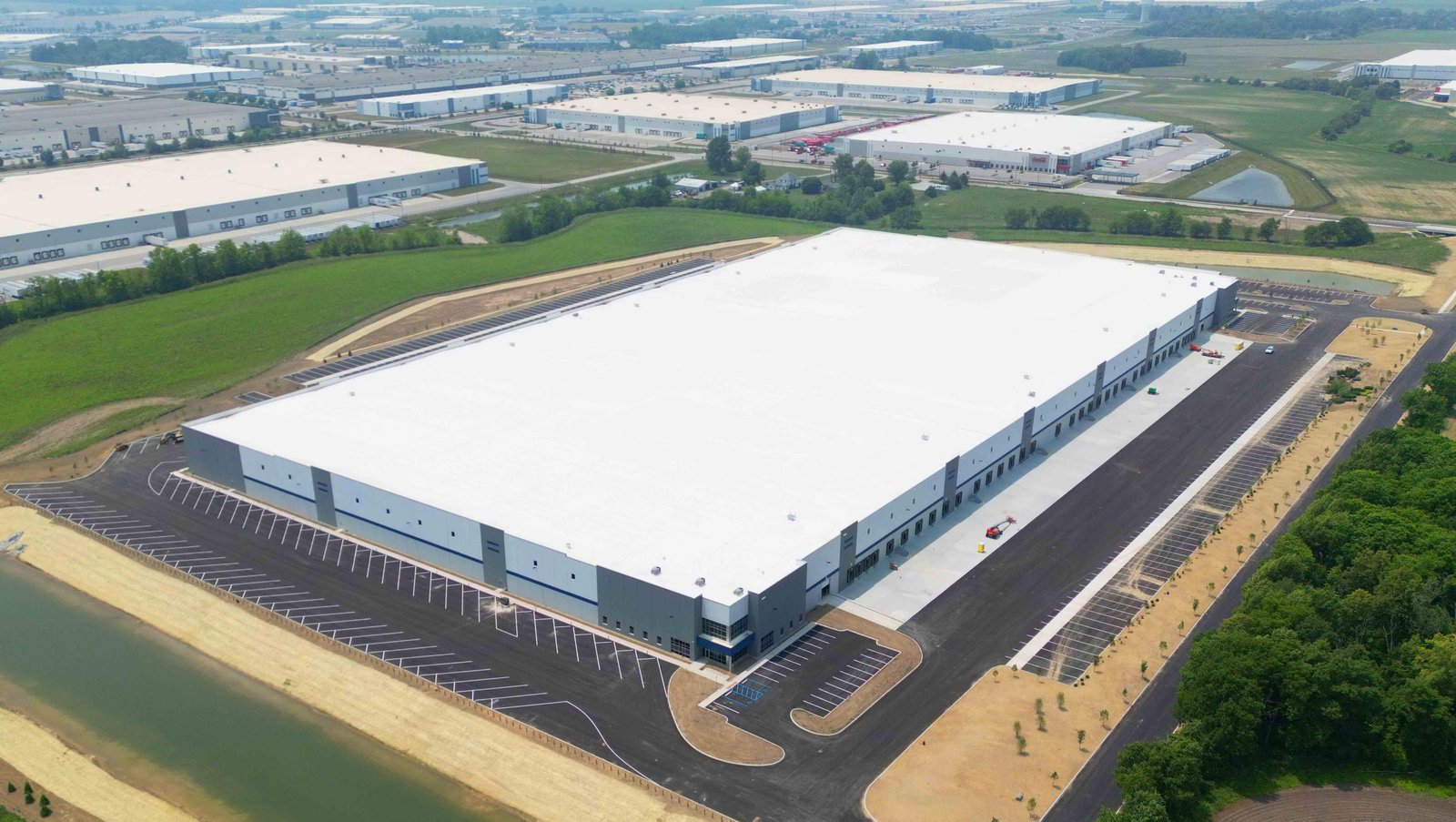
Distribution Center Construction for Brownsville and the Border Trade
About 800 trucks a day crossed the Veterans International Bridge at Los Tomates in 2019, according to a published summary of the county-owned crossing, out of roughly 4,000 vehicles in all. Numbers like that tell a distribution builder where the pressure sits: not in the warehouse volume, but in the apron, the queue, the turning radius and the first mile after the highway. A distribution center in the Brownsville area is a truck-handling machine that happens to have a roof.
The crossings are one side of the picture. On the other side are the port, with its short-line rail connecting to Class I railroads, and the interstate corridor now taking shape along State Highway 550 and Interstate 169. Owners who locate between those assets have choices about which direction freight arrives from, and each choice changes how we lay out the dock walls, the trailer parking and the entrance drives.
We build for operators who expect to stay, so we talk through throughput first and then work backward into slab, steel and site. Below is how that conversation usually runs.
Dock walls, slabs and the geometry of trucks
The dock wall is where a distribution center earns its keep. We size the number of doors from peak truck arrivals, set door spacing for the trailers your carriers actually run, and decide between cross-dock and single-sided loading before we fix the building width. A deeper building gives more storage but less flexibility, so we test the plan against a few operating days instead of a single average.
Floors take heavier punishment than in a general warehouse. Racking loads, narrow-aisle equipment and constant forklift traffic call for tight flatness tolerances, a well-placed joint layout and a subgrade that will not settle unevenly. The dock apron needs its own design, a topic we expand on under truck courts and dock aprons, because trailers dropping their landing gear on thin pavement leave marks within a season.
Truck behavior also shapes the rest of the lot. Empty trailers wait somewhere, drivers need a place to check in, and a gatehouse or guard shack works only if the entrance has room for a tractor and trailer to stack off the public street. We draw those queues on the site plan early, because a lot that backs traffic onto the frontage road becomes a neighbor problem and sometimes a permit problem.
Bridges, rail and the new interstate
The Cameron County Regional Mobility Authority describes the State Highway 550 and Interstate 169 corridor as a planned 10-mile interstate tying the Port of Brownsville and State Highway 48 into Interstate 69E, with the first phase finished and a later gap still needing interstate-standard plans and a bridge over the Union Pacific rail line, and $16 million listed as available through the Brownsville metropolitan planning organization. The status shifts, so we check it before any site decision rests on a future ramp.
The Town of Rancho Viejo, which sits between Brownsville and Harlingen, lists approximate distances of 11 miles to the Port of Brownsville, 12 miles to the Gateway International Bridge and 18 miles to the Los Indios Free Trade Bridge. A distribution center in that stretch, or in the Rancho Viejo area, can reach both the port and several crossings, which is a real advantage for third-party operators who serve more than one customer.
Sequencing a distribution build around freight and weather
The critical path on a distribution center runs through the slab and the long-lead items: dock levelers, overhead doors, racking, fire pumps and electrical gear. We order early when the schedule demands it, a practice described on our long-lead procurement page, and we phase the site so the truck court is poured while the building is rising rather than after it.
Summer storms and named-storm threats shape the calendar on the coast. The National Weather Service reported rainfall of 7.16 to 8.65 inches at Brownsville-area gauges during Hurricane Hanna in July 2020, a reminder that earthwork and slab placement need a weather plan and a tied-down site. We build contingency into the schedule rather than promise a date we cannot defend.
Codes, floodplains and who reviews what
Texas law sets the 2012 International Building Code as the floor for municipal commercial construction, and cities may adopt later editions by ordinance. That means a distribution center in one city can be reviewed under a different code edition than one a few miles away, and Harlingen and McAllen have both adopted the 2024 codes, while Brownsville’s edition is something we confirm directly. We confirm with the building department before the design is frozen.
Projects at or above $50,000 must also be registered with the Texas Department of Licensing and Regulation for accessibility review under the 2012 Texas Accessibility Standards, which affects the office, restrooms and parking even on an industrial building. Fire access, sprinkler design for rack storage and the flood elevation rules covered on our permitting and entitlements page complete the review set.
Where a distribution center sits among its neighbors
A distribution center overlaps with a plain warehouse, a fast-turn truck terminal and cross-dock and the e-commerce style fulfillment center. The difference is mostly in throughput and the amount of automation the owner expects. We help buyers decide which of those they are actually building, and the answer usually becomes obvious once the first dock count is on paper. Operators in the logistics and distribution field bring the most variety.
Plan the dock wall with us before you buy the land
Share the freight volumes, the trailers and the target crossing or port, and we will help you test a site and a building plan before you commit.
Questions Owners Ask
How many dock doors does a distribution center need?
Start from peak truck arrivals per hour and the time each truck stays at the door, then add a margin for growth. A common mistake is sizing for the average day. We build a simple door model with you and test it against your busiest week.
Is concrete required across the whole truck court?
Not always. Concrete belongs at the dock apron and in turning areas where trailers pivot and park. Lighter car parking and drive lanes may use asphalt. We price the split so you see the cost of each.
Should I wait for Interstate 169 to be finished before buying?
Not necessarily. The corridor is partly built and a later gap still needs plans and a rail bridge, so we would not stake a deal on a date. We look at current access first and treat future ramps as a bonus.
Will building near a bridge change my permit path?
The permit path depends on whether the parcel sits inside a city or in unincorporated Cameron County, and on the flood rules that apply. Bridge proximity helps operations but does not change the building review. We confirm the reviewing body at the start.
How do hurricane rules affect a distribution roof?
The roof and wall system must be designed for the wind loads and certified under the state windstorm program, which moves to the 2024 building code for applications from April 1, 2026. We design the envelope for that standard from the start.
Related
Related Services
Related Building Types
Ready to talk about your project?
Request a Project Review
Planning a build in Brownsville or Cameron County?
Share the site, the building and the schedule. We will walk the drainage, soils and permit path with you and follow up with next steps.