Design-Build Construction in Brownsville and the Valley
Roughly $42 million may be available, without bonds, to expand the South Padre Island Convention Centre, according to the Port Isabel-South Padre Press in March 2026, and yet no construction cost estimate had been presented at the open house. The concept would grow the exhibit hall from about 22,000 square feet to about 50,000. That gap, a pot of money on one side and no price on the other, is exactly where design-build earns its place.
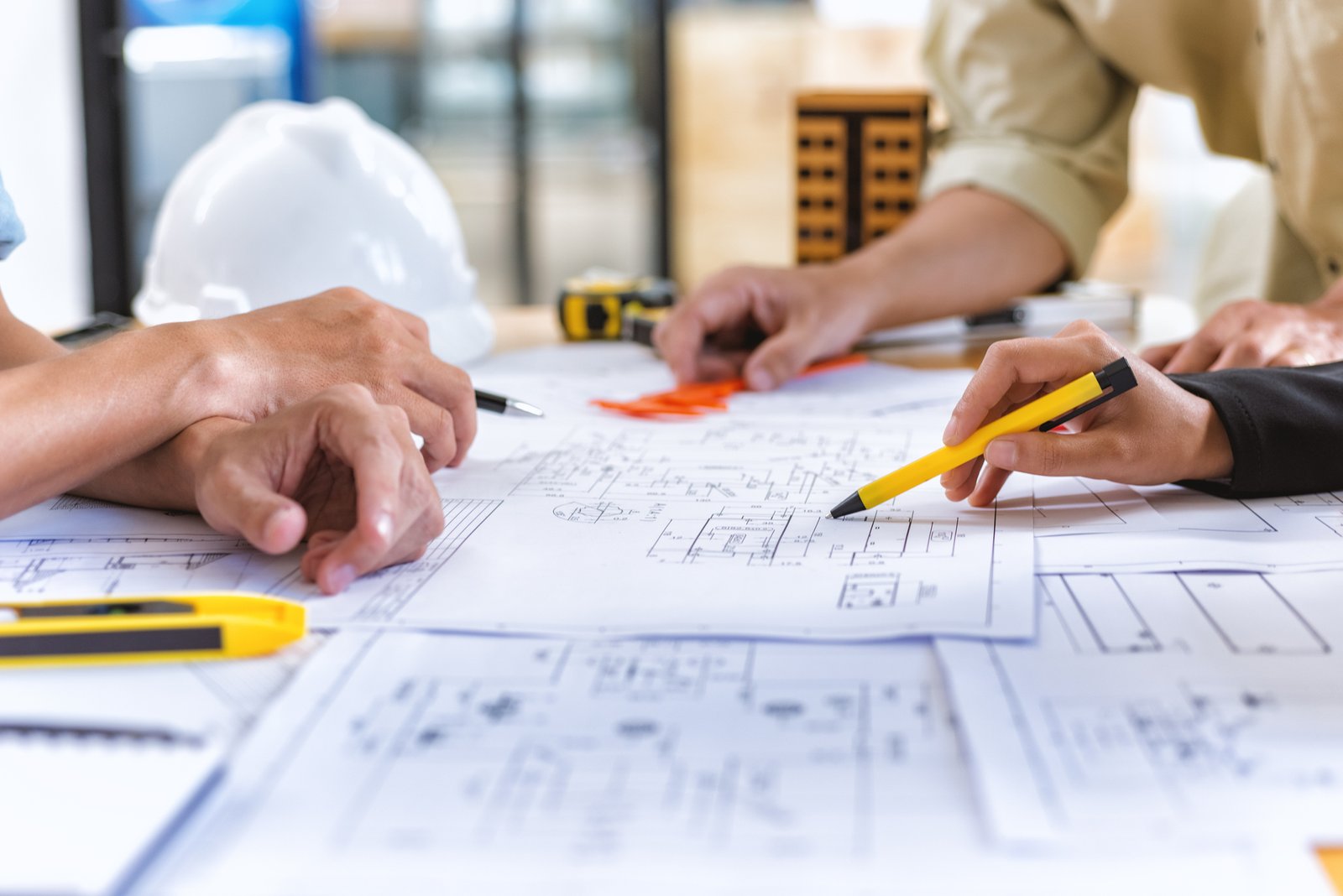
In a design-build project, one team is responsible for both the design and the construction under a single contract. The owner states the need, the budget and the schedule, and we assemble the architect, the engineers and the specialty trade partners to deliver. Because the people pricing the building are in the room while it is being drawn, the design stays inside the budget instead of bouncing between a designer's ideal and a builder's reality.
Below is how we run design-build in the Brownsville area and where it works best.
One contract, one conversation
We start with the owner's goals: what the building must do, how many people it serves, what quality level and how much money. From there, we develop a program and a concept, then price it as the drawings progress. At each step, the owner sees the cost of a choice before making it. If a feature pushes the budget over, we offer alternatives, such as a different structural system, a simpler facade or phasing, before the design is far along.
The design team is selected for the project, not for convenience. We bring local architects and engineers who know the coastal wind rules, the flood regulations and the soils, and we expect them to work alongside our estimators and superintendents. The result is a design that can actually be built on the schedule and for the price the owner has in mind. When owners prefer to hire their own designer first, our construction management at risk service offers a different route with similar collaboration.
Communication is the quiet advantage. We hold regular design meetings that include the owner, the architect, the engineers and our estimator and superintendent, and we keep an open list of decisions with names and dates beside them. Nothing gets lost in a handoff between companies because there is no handoff to lose it in. For owners who have been through a project where the designer and the builder blamed each other for a problem, that single point of responsibility is often the deciding reason to choose the method.
What the design-build team delivers
Our scope covers programming, site evaluation, design, permitting, procurement, construction and closeout. We manage the architect and engineers, prepare permit sets, coordinate utility providers and handle the building department. The owner gets one point of contact and a single schedule that includes design milestones as well as construction ones.
Owners can choose how much control to keep. Some prefer to approve each design milestone, others give broad direction and review at major decision points. We adapt, but we always keep a written record of decisions and costs so there is no confusion later. The preconstruction estimating work we do at the start is the foundation of the process, since a design-build contract is only as good as the budget behind it.
Overlapping design and construction
The main schedule advantage is overlap. Site work can begin while the building design is being finalized, and foundations can start before interior details are complete. Long-lead items can be ordered earlier, because the builder and the designer agree on specifications sooner. Public records show how quickly some owners want to move. The Texas Department of Licensing and Regulation lists a $100 million project at Starbase, adding five levels of office mezzanine to an existing industrial factory of about 1 million square feet, registered February 13, 2024, with construction scheduled to begin February 23, 2024. That is ten days from registration to the start of construction, though it is not our project and we cannot say how it was delivered.
On our own jobs, we set early milestones for design approvals, permit submittals and long-lead orders, and we hold to them. Weather and permitting still apply, so we include realistic float. A design-build schedule can save months, but only if the owner makes decisions on time. We tell owners which decisions are on the critical path and by when. Bilingual communication helps here as well: our team can walk a family-run owner, a city council or a board through the same documents in either language, so decisions are made with a full understanding of what is being approved.
Holding the number
A design-build contract usually sets a guaranteed price or a target price at a point in the design, once the scope is clear. Before that point, we provide budget updates as the design develops. After it, changes are managed through a documented process. Typical budget movers include site conditions, the structural system, the building envelope, mechanical and electrical systems and owner-selected finishes.
Public records give a sense of the range of budgets in the area. A syndicated article in October 2025 citing state filings reported a $20 million first phase of a school and a $22 million, 20,000-square-foot community center with a pool planned in Starbase. These are other people's projects, but they show that community buildings with specialized spaces cost real money, and a pool, a gymnasium or a kitchen changes the budget. We help owners find the features that matter most and decide what to defer.
Who chooses design-build
Design-build suits owners who want speed, cost certainty and a single point of accountability. Public agencies, school districts and cities may have procurement rules that limit the method, so we explain those in plain terms for government and public sector clients and for education institutions. Private owners such as developers, operators and industrial users usually have more freedom to choose.
The method is also helpful at the coast. A project near South Padre Island must account for the island's single causeway, hurricane planning and a tight window of construction between busy seasons, and a unified team can plan those constraints from the first sketch. The same applies to unusual sites at Starbase, where schedules are driven by the pace of the surrounding development.
Start with a number and a need
Tell us what you want to build and what you can spend. We will assemble a team and show you what is possible.
Questions Owners Ask
Is design-build more expensive than traditional delivery?
Not necessarily. It often reduces total cost by cutting redesign and shortening the schedule. The key is a clear budget at the start.
Do I still get to choose the architect?
You can have input, and in some cases you bring your own designer. We then work under a collaborative agreement.
Can public agencies use design-build?
In some cases, depending on the rules that govern the agency. We explain the options and coordinate with the agency's counsel and procurement staff.
What if the design grows past the budget?
We flag it as soon as we see it and offer alternatives. The owner decides what to cut, change or fund.
How are accessibility rules handled?
Projects costing $50,000 or more are registered with the state for review under the Texas Accessibility Standards. We include that in the design schedule.
Related
Related Services
Related Industries
Related Service Areas
Ready to talk about your project?
Request a Project Review
Planning a build in Brownsville or Cameron County?
Share the site, the building and the schedule. We will walk the drainage, soils and permit path with you and follow up with next steps.