
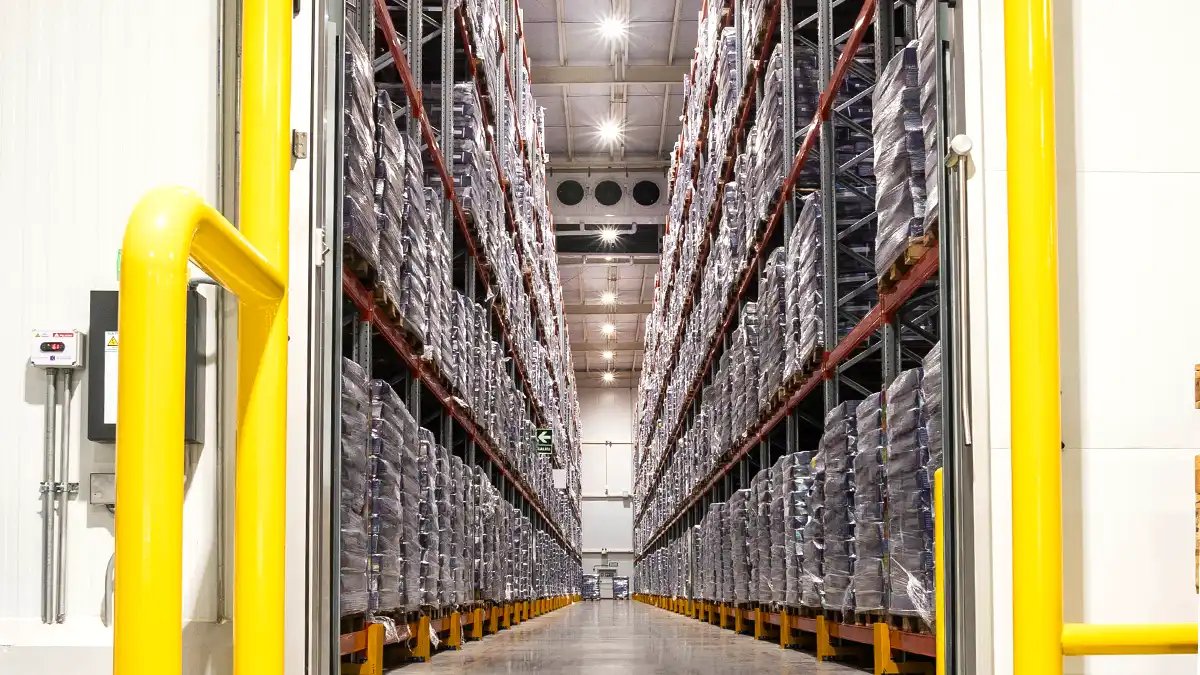
Cold Storage Facilities in a Hot, Wet Border Market
Citrus groves, sugarcane and grain fields surround Los Fresnos, about 12 miles north of Brownsville, and a planned flour mill and sunflower seed plant at the port will add processed goods to the mix. Anything that grows or travels through this corner of Texas in a warm month has a clock on it, and that is the simplest argument for cold storage. A refrigerated building here protects produce, dairy, meat and medicine from heat that arrives early and stays late.
A cold storage facility is also one of the most demanding buildings a general contractor can take on in a flat, wet, hurricane-exposed place. The envelope has to hold a very large temperature difference between the freezer and the outdoor air in August. The floor sits on soil that moves. The refrigeration plant needs power that must not drop in a storm. We approach each of those problems separately and then put them back together into one building.
This page walks through the issues in the order we meet them on a job: site and floor first, then envelope and refrigeration, then the rules that decide what can be built where.
Frost heave in a place that never freezes
It sounds odd, but a freezer slab in South Texas can lift. If the ground under a freezer cools below freezing for long enough, moisture in the soil freezes and expands, pushing the slab up. The fix is an underfloor heating or ventilation system, an insulated sub-base and a vapor barrier. We design it with the refrigeration engineer so the heat source is reliable and the slab never gets the chance to lift.
The native soil adds a second challenge. The USDA description of the Harlingen soil series, established in Cameron County and extensive in south Texas, lists 60 to 75 percent clay with slickensides starting at 20 to 30 inches and cracks that stay open for roughly 150 to 210 days in most years. A building that is sensitive to differential movement needs a foundation plan that accounts for that behavior. Our deep-drilled pier work is often the answer for the column lines.
Envelope, insulation and doors
Insulated metal panels are the common envelope for cold storage because they combine structure, insulation and an air and vapor barrier in a single factory-made unit. Details at the base, corners and penetrations decide whether the panel performs. A small gap lets in humid coastal air, which condenses, freezes and eventually damages the insulation. We supervise panel installation closely and test the building for air tightness where the design calls for it.
Dock doors, vestibules and anteroom spaces are the second source of heat gain. We lay out the dock so trailers seal against the building and product moves through a cold or conditioned transition. Owners who handle both ambient and cold goods can pair the refrigerated block with a conventional warehouse bay on the same site, sharing the truck court and utilities. The dock and apron planning we describe for a distribution center applies here too, with tighter door seals.
Operators in logistics and distribution are the most frequent cold storage buyers we meet, followed by food processors and wholesalers. A site near the Port of Brownsville helps those with import or export flows, while a site along the highway suits regional distribution. Either way, we ask early where the power comes from and how quickly the utility can deliver it, because refrigeration loads are large and utility lead times are not always short.
Refrigerant, hot work and life-safety
Ammonia and other refrigerant systems bring their own rules for ventilation, detection, emergency shutoff and operator training. Panel buildings also carry fire-resistance considerations, so sprinkler design and compartmentation get attention early. Code reviews are handled by the local building and fire officials, and we bring the refrigeration engineer into those conversations rather than relaying their questions.
On site, we manage hot work carefully near foam-core panels, enforce lockout and tagout on temporary power and keep workers out of cold zones until the building is fully commissioned. The construction trade partners are trained to work in the heat of a coastal summer, and we adjust shifts and breaks for it. Safety on a cold storage job starts with the people who spend ten hours a day on a roof deck in July.
Why the Rio Grande Valley needs more cold space
Foreign Trade Zone No. 62 at the Port of Brownsville and a short-line rail connection to three Class I railroads give shippers a way to bring chilled and frozen goods in and out of the region. Border crossings handle trucks of their own, and the Veterans International Bridge at Los Tomates connects at the southern end of US 77 and US 83. Produce, seafood and processed food move through these gateways in the heat, and a cold building near the highway keeps them within temperature.
Food investment is part of the picture too. A flour mill and sunflower seed plant expected to employ 120 people at the port shows the kind of processor that sometimes needs adjacent cold or climate-controlled space, and we discuss that overlap on the food and beverage processing page.
What drives a cold storage budget
Refrigeration equipment, insulated panels and the specialized slab typically dominate cost. The electrical service for compressors and fans is large, and a backup generator is a standard line item in a market where tropical storms are a real possibility. Hurricane Dolly in July 2008 produced an estimated storm surge of 4 feet at the Port of Brownsville Ship Channel entrance, which is why we elevate critical equipment above flood level.
To manage cost, we price the building in zones (freezer, cooler, dock, dry storage) and show the owner how much each adds. Changing a freezer to a cooler, or reducing the number of temperature zones, can change the budget more than any finish decision. Details on early numbers are on our cold storage construction page.
Get your temperature-controlled building right the first time
Tell us what you store, at what temperature and how it moves in and out. We will work through the slab, envelope and storm plan with you before you commit to a site.
Questions Owners Ask
Why does a freezer need underfloor heat in Texas?
Because a freezer cools the soil beneath it even in a warm climate. If that soil freezes, it can expand and lift the slab. Underfloor heating or air circulation prevents it. We design the system with your refrigeration engineer and test it before the floor goes into service.
What happens when the power goes out in a storm?
A standby generator sized to carry the refrigeration load is standard for most owners here. We locate it above the flood level, and we plan fuel storage, transfer switches and test procedures with your operations team.
Is insulated metal panel the right envelope?
For most cold buildings, yes, because it delivers insulation and an air and vapor barrier in one product. Tilt-wall with interior insulation is an alternative for some owners. We compare the two for cost, speed and maintenance.
Can I add cold space to an existing warehouse?
Often, yes, but it requires a new slab section, a separate envelope and care at the connection. We assess the existing slab, roof and electrical service before recommending an approach.
Related
Related Services
Related Building Types
Related Service Areas
Ready to talk about your project?
Request a Project Review
Planning a build in Brownsville or Cameron County?
Share the site, the building and the schedule. We will walk the drainage, soils and permit path with you and follow up with next steps.