
Airport-Area Construction at Brownsville/South Padre Island Airport
Airside work follows different rules than any other construction we do, and the buildings around an airport carry their own set of demands. We build hangars, airport-adjacent offices, hotels, rental car and ground-support facilities, and light industrial buildings near the Brownsville/South Padre Island International Airport, and we plan each one around restricted access, tall-structure review, wind and the owner's need to keep operating. Airport owners and tenants rarely get to close their doors for a renovation, so phasing is as much a part of the job as the concrete.
The airport sits about five miles east of downtown Brownsville and has two asphalt runways, one of 7,399 feet and one of 6,000 feet. Wikipedia's summary of FAA data reports 319,000 passengers and about 25,603 aircraft operations in 2024, and notes that no cargo carriers serve the airport on a regular basis. Those numbers describe a regional passenger airport with room for general aviation and corporate hangar space rather than a freight hub, and that shapes what we think makes sense to build nearby.
We talk to owners and tenants in plain language about what the airport authority will need to see before approving a structure, what an FAA-funded project asks of a contractor, and what a realistic schedule looks like.
A new terminal and the ripple around it
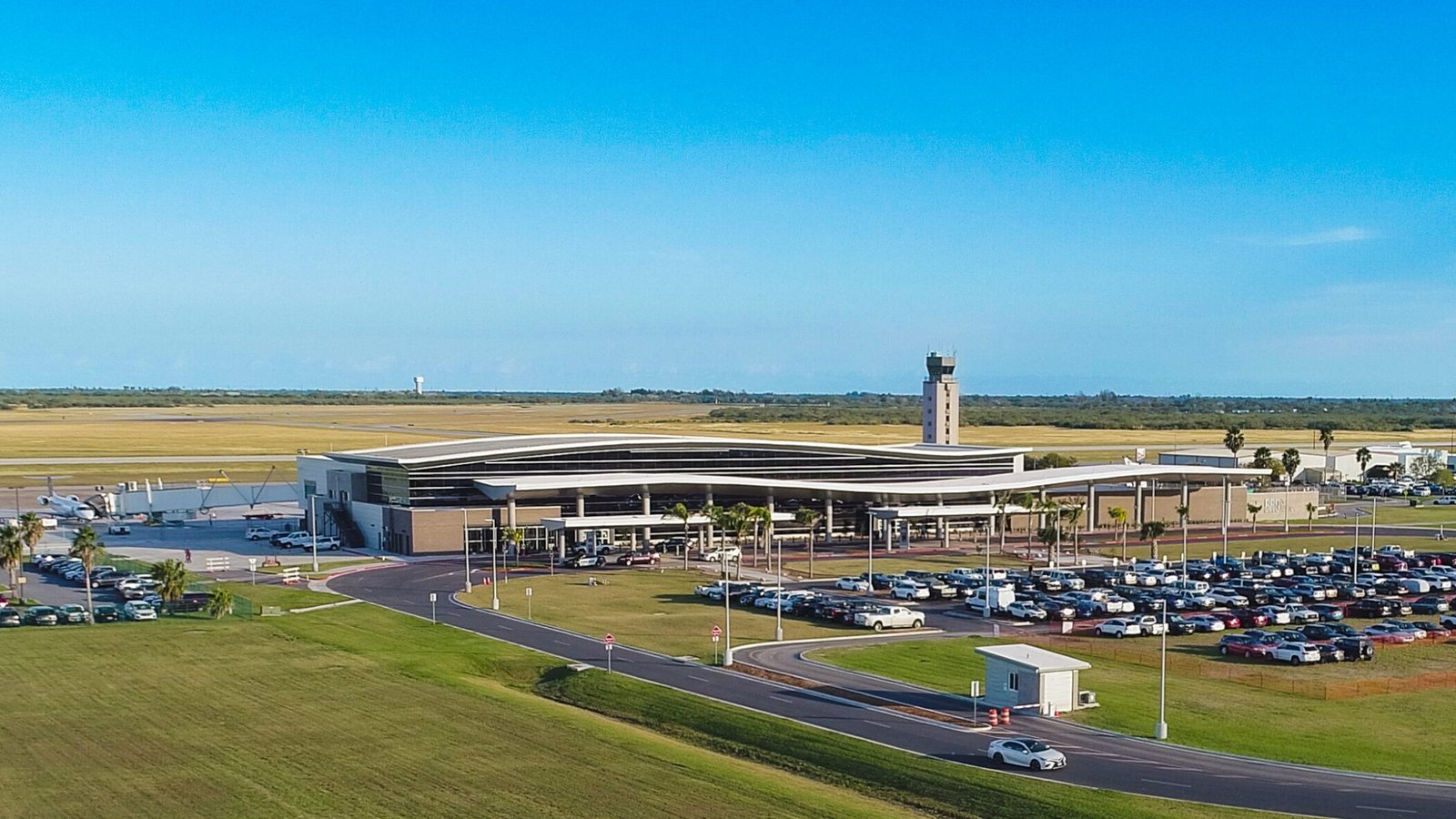
Airport Improvement reported that the new terminal is about 91,000 square feet, cost roughly $70.4 million, has four gates (two domestic and two international swing gates), and opened to the public in early January 2021. It was funded with Airport Improvement Program grants, local bonds and passenger facility charge revenue. A terminal with swing gates is designed to handle international arrivals, and that kind of capacity attracts the supporting uses that keep an airport running: hotels, offices, parking, car rental and food service.
For a developer, the question is whether a given parcel near the airport has the access, utilities and approvals to serve those uses. Our hospitality and hotel construction work includes the sequencing around curb cuts, signage, lighting restrictions and noise considerations that airport-adjacent sites often face. We review the height and approach restrictions on a parcel early, because a building that pokes into an approach surface is one the FAA will not let you finish.
FAA funding, tall-structure review and Texas accessibility
A September 2025 press release announced a $3,193,735 Federal Aviation Administration grant to reconstruct the final phase of Runway 18/36 at the airport, with the airport director expecting construction to begin in early 2026. Federal grant work carries specific requirements for bidding, wage rules and sourcing that differ from a private job. If you plan to build on airport property, expect the lease, the authority's design standards and any federal conditions to shape the scope.
Buildings off airport property still deal with review. Anything tall, including cranes during construction, may need notice to the FAA. On the state side, projects costing $50,000 or more must be registered with the Texas Department of Licensing and Regulation for accessibility review, and smaller projects must still comply with the standards. Our permitting team puts those steps on the schedule from day one so no review surprises the owner.
Hangars and clear-span buildings
The tenants of a regional airport are often charter operators, flight schools, maintenance shops and corporate owners who need a clear-span structure with a large door. We build these as clear-span rigid frame buildings with the frame, door header and foundation designed together, since a hangar door may be 60 or more feet wide and the loads it transfers to the frame are considerable. Our aircraft hangar work pays attention to slab flatness, door clearances and floor drainage, details that matter when an aircraft is rolled on and off the floor.
We pour the slab, with drainage, floor trench and oil separator provisions where fire and environmental rules require them. Fire suppression in a hangar is a specialized design, usually foam or high-expansion systems, and we coordinate it with the engineer and the fire marshal rather than treating it as a late add-on.
Wind, storms and what Hanna taught the airfield
The National Weather Service reported that an EF0 tornado from Hurricane Hanna on July 26, 2020 touched down about 4.7 miles east-southeast of Brownsville, blew windows out of an airport hangar and moved a 737 into a hangar. An aircraft shoved into a structure is an extreme example, but it shows how much wind load a large building with large doors must resist. Open hangar doors act like sails, and the connection between the door, the frame and the foundation is where we spend extra engineering time.
Beyond design, safety on airport sites means badging, escorts, vehicle rules, foreign object debris control and daily coordination with airport operations. Our superintendents brief every crew on those rules before mobilizing, and we keep a clean site because a loose piece of rebar on an apron is a hazard to an aircraft engine. That discipline carries over to the rest of our work in the Brownsville market.
Pavement, parking and phased renovations
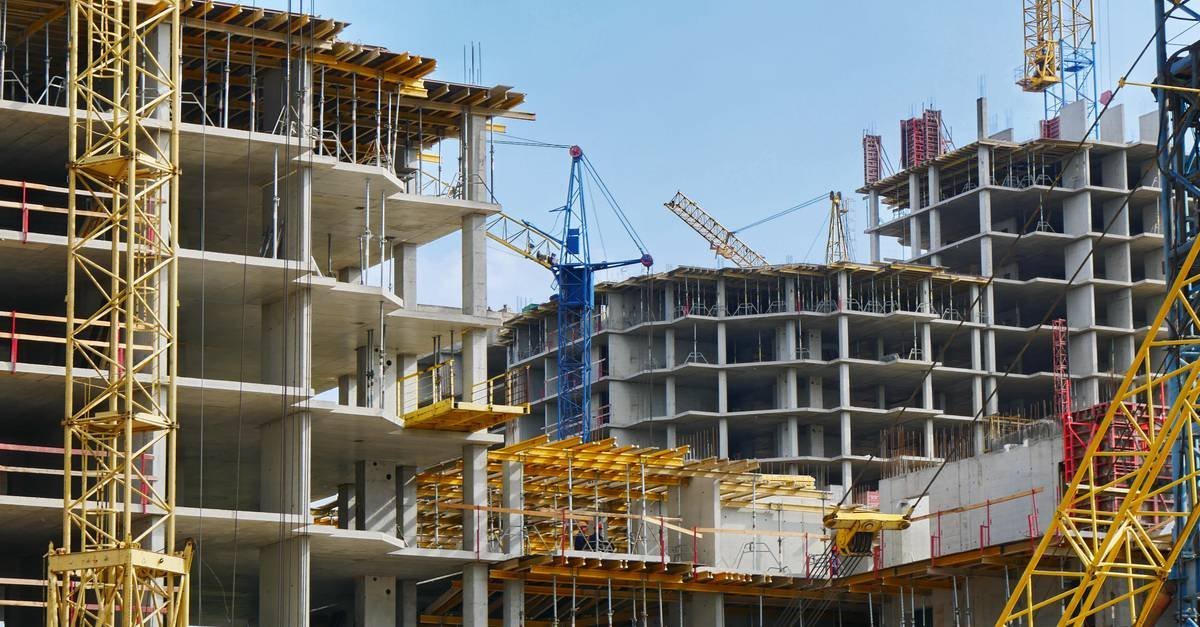
Airports consume asphalt and concrete. Aprons, access roads, employee lots and rental car staging all need pavement designed for the loads they will carry, and the trade partners for parking lot construction handle subgrade, drainage and striping together. When a terminal or office expansion must happen while the existing facility stays open, we use phased construction on occupied sites, with dust barriers, temporary egress and after-hours work for noisy tasks.
Our work also extends to government and municipal buildings associated with airport operations, such as fire stations, maintenance garages and administration space, and to the neighboring Port of Brownsville where freight rather than passenger traffic drives demand.
Talk through your airport-area project
Share the parcel, the aircraft or use, and your timeline. We will check height limits, utilities and wind exposure, then give you a plain-language budget. You may also want to see our Los Fresnos market work if your site is north of the city.
Questions Owners Ask
Can you build a hangar on airport property under a ground lease?
Yes, but the lease and the airport authority's standards come first. We review them with you before design so the building meets setback, height, color and fire requirements. Ground leases also affect financing, so involve your lender early.
How wide can a hangar door be, and what does that do to the cost?
Door width is set by the aircraft you plan to house and the clearance you want. Wider openings need a heavier header, stronger frame members and a bigger foundation at the jambs, and the door itself is a significant cost. We price a few widths so you can see the tradeoff before committing.
Does airport construction take longer than other commercial work?
It can. Access, security badging, inspections by the authority and the need to coordinate with flight operations add steps. A realistic schedule includes those, and we show them as separate lines so you can see which dates the authority controls.
Is the area suitable for warehouse or distribution buildings?
The airport has no regular cargo service according to FAA-based figures cited by Wikipedia, so demand for air-freight facilities is limited. Light industrial, flex and general aviation buildings fit better. For large freight buildings, the port corridor is usually the stronger choice.
Do you need to notify the FAA when you use a crane?
Possibly. Tall equipment near an airport can require notice and review, depending on height and distance from the runways. We check the parcel's location early and handle the filings as part of our permitting work so the crane date is not a surprise.
Related
Related Services
Related Building Types
Related Service Areas
Ready to talk about your project?
Request a Project Review
Planning a build in Brownsville or Cameron County?
Share the site, the building and the schedule. We will walk the drainage, soils and permit path with you and follow up with next steps.