
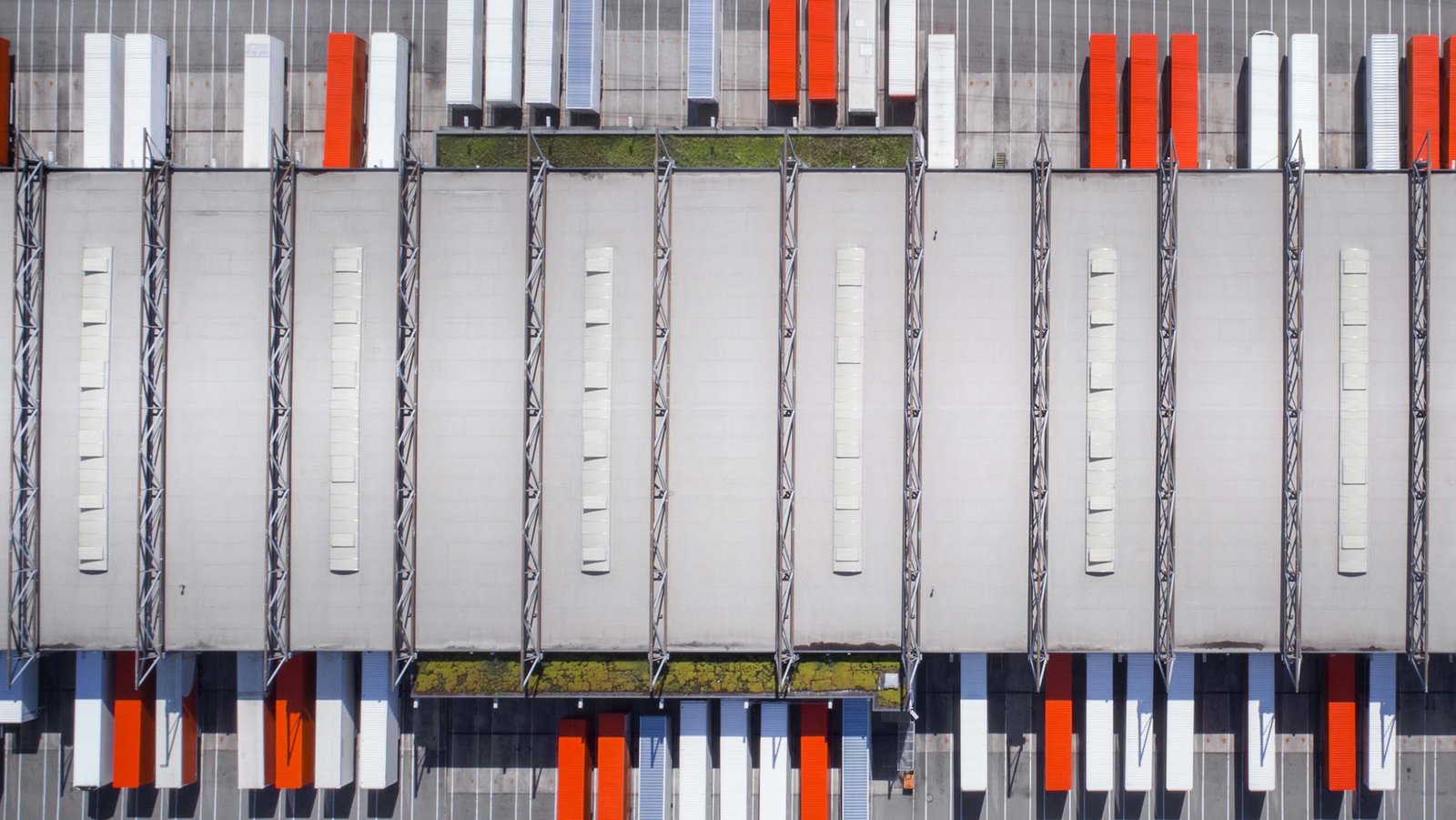
Truck Terminals and Cross-Dock Buildings Near the Border Crossings
Four hundred and fifty thousand truck movements were recorded at the Port of Brownsville in 2024, according to a trade profile of the port, and that is before counting a single vehicle on the bridges. A truck terminal is the building type that lives or dies on those movements. It is long and narrow, doors line both sides, and the yard around it matters as much as the walls. Freight arrives on one side, gets sorted and leaves on the other, sometimes within hours.
A cross-dock handles freight with almost no storage. Pallets and cartons move from inbound trailers to outbound ones across the dock floor, so the floor, the dock edges and the paving take far more punishment than in a warehouse. The terminal side of the business adds trailer parking, driver facilities, fueling or maintenance areas in some cases, and a site layout that keeps tractors from crossing each other in tight turns.
We build these facilities for carriers, forwarders and third-party logistics operators. Below we describe what we ask, what we build and what usually goes wrong when a terminal is designed by default.
Crossings, port gates and the road network
The same trade profile describes the port as 7 miles by truck from international crossings and 13 miles by rail, and notes 95,000 railcar movements in 2024. The county-owned Veterans International Bridge at Los Tomates opened in 1999 with four general lanes plus a truck lane and, in 2019, handled roughly 800 trucks a day on average, according to a reference summary. Other crossings are within reach for terminals located between Brownsville and Harlingen.
State Highway 550 connects to the port over about 1.5 miles, and the corridor is being upgraded to interstate standards in stages. A terminal near that corridor, or near the southern end of US 77 and US 83, has a clear route to the port and the crossings. Carriers deciding where to put a terminal often weigh the distance to the bridge, the traffic on the access road and the cost of land. We help clients visit candidate sites with those questions in hand.
Long dock walls, short turns
Terminals use a narrow building, often between 100 and 200 feet wide, with dock doors on both long sides. A cross-dock may have a dock door every 12 to 14 feet, plus a floor that tolerates constant forklift traffic. Building length follows the number of doors the volume requires, and the yard on each side must be deep enough for trailers to back in with room to maneuver. We set these dimensions with the operator, usually after reviewing truck turning paths on a drawing.
Offices, driver lounges and dispatch rooms usually sit at a corner or on a mezzanine over the dock. Sometimes a maintenance bay, tire shop or wash bay is added to the program. Related building types, such as a standard warehouse or a full distribution center, differ mainly in how long freight sits and how much automation is involved, and we can expand a terminal into either later.
The yard is the building
Truck yards fail from the ground up. Heavy tractors and loaded trailers concentrate stresses on thin pavement, particularly at the stopping and turning points. In Brownsville’s clay soils, which a reference source describes as mostly clay to silty clay loam, the subgrade must be stabilized and drained or the pavement will pump and crack. We design concrete in the dock aprons, entrance apron and turning zones and asphalt or concrete elsewhere depending on budget.
Water is the second yard problem. The National Weather Service reported rainfall of 4 to 13.20 inches in Brownsville through June 22, 2018, with downtown, west and northwest areas flooding, and flat sites do not shed that water without a plan. We grade for positive drainage, set inlets to catch runoff before it reaches the dock and provide detention where required. Our truck courts and dock aprons work covers the paving methods in more detail.
Coordinate concrete and earthwork packages
We coordinate and manage the specialty trade partners for the work that determines whether a terminal survives: subgrade preparation, utilities, reinforced concrete slabs and heavy paving. Controlling that work lets us keep the tolerance on dock edges tight so that levelers and seals line up, and it lets us respond directly when the weather changes the pour plan.
Lighting, fencing, gatehouse, truck scale pads and security cameras are coordinated into the same site package. Truck terminals often operate around the clock, so we plan electrical service and lighting for night work. Owners in logistics and distribution know that a poorly lit yard is both a safety issue and a theft risk.
Building while freight still moves
Many terminal projects are expansions or relocations, which means the existing operation keeps running while new work happens. We phase paving so trucks always have a path, hold concrete cures to protect high-traffic areas and set up temporary dock access when an existing wall is modified.
New terminals benefit from early utility and permit coordination. Driveway permits onto state highways, stormwater approvals and fire access are all schedule items, and we start them first. We cover those steps in more detail at permitting and entitlements, and tie them to the Brownsville market in the project schedule.
Hurricane season needs a plan that a terminal owner rarely wants to think about in April. Trailers parked in an open yard become wind-borne hazards if a storm approaches, so the operating plan should say where they go and who moves them. The National Weather Service noted that Hurricane Dolly in July 2008 produced an estimated 4 feet of storm surge at the Port of Brownsville Ship Channel entrance, and low sites near the channel should place electrical gear, fuel tanks and scale controls above flood level. We work those items into the design rather than adding them after the first scare.
Walk a terminal site with a builder first
Share your door count, trailer volume and shortlisted parcels. We will review turning paths, drainage and paving before you commit to a site.
Questions Owners Ask
How many doors does my cross-dock need?
It depends on daily trailer volume, average dwell time and how many shifts you run. We usually build a model with your operations team and test it against peak days, then add room for growth at the end of the building.
Concrete or asphalt for the whole yard?
Concrete holds up best at the dock apron and where trailers turn and park. Asphalt can serve lighter traffic areas at lower first cost. We price the combination and show lifecycle costs.
Can we stay open while you build?
Often, yes. We phase paving and building work, keep a path for trucks and schedule disruptive tasks for off hours. Planning the sequence early is what makes this possible.
What does a storm do to a truck yard?
Heavy rain can flood a flat yard and wash out unstabilized shoulders, while high wind can move parked trailers. We grade for drainage, protect electrical equipment and lighting poles and help you write a trailer-securing plan. Raising critical equipment above flood level is inexpensive during construction and costly afterward.
Do I need a state highway driveway permit?
If the parcel takes access from a state route, the Texas Department of Transportation reviews the connection. We check access early because it can affect where the building sits.
Related
Related Services
Related Building Types
Ready to talk about your project?
Request a Project Review
Planning a build in Brownsville or Cameron County?
Share the site, the building and the schedule. We will walk the drainage, soils and permit path with you and follow up with next steps.