Logistics and Fulfillment Centers for the Lower Rio Grande Valley
Order fulfillment depends on getting a package to a doorstep fast, and from Brownsville that means reaching a population spread along a long, narrow corridor: Los Fresnos to the north, Port Isabel and South Padre Island to the east, Rancho Viejo and the towns toward Harlingen on the way to the rest of the Valley. A fulfillment center here is judged by how many of those doorsteps it can reach in a day, which makes the site and the road network the first design decisions.
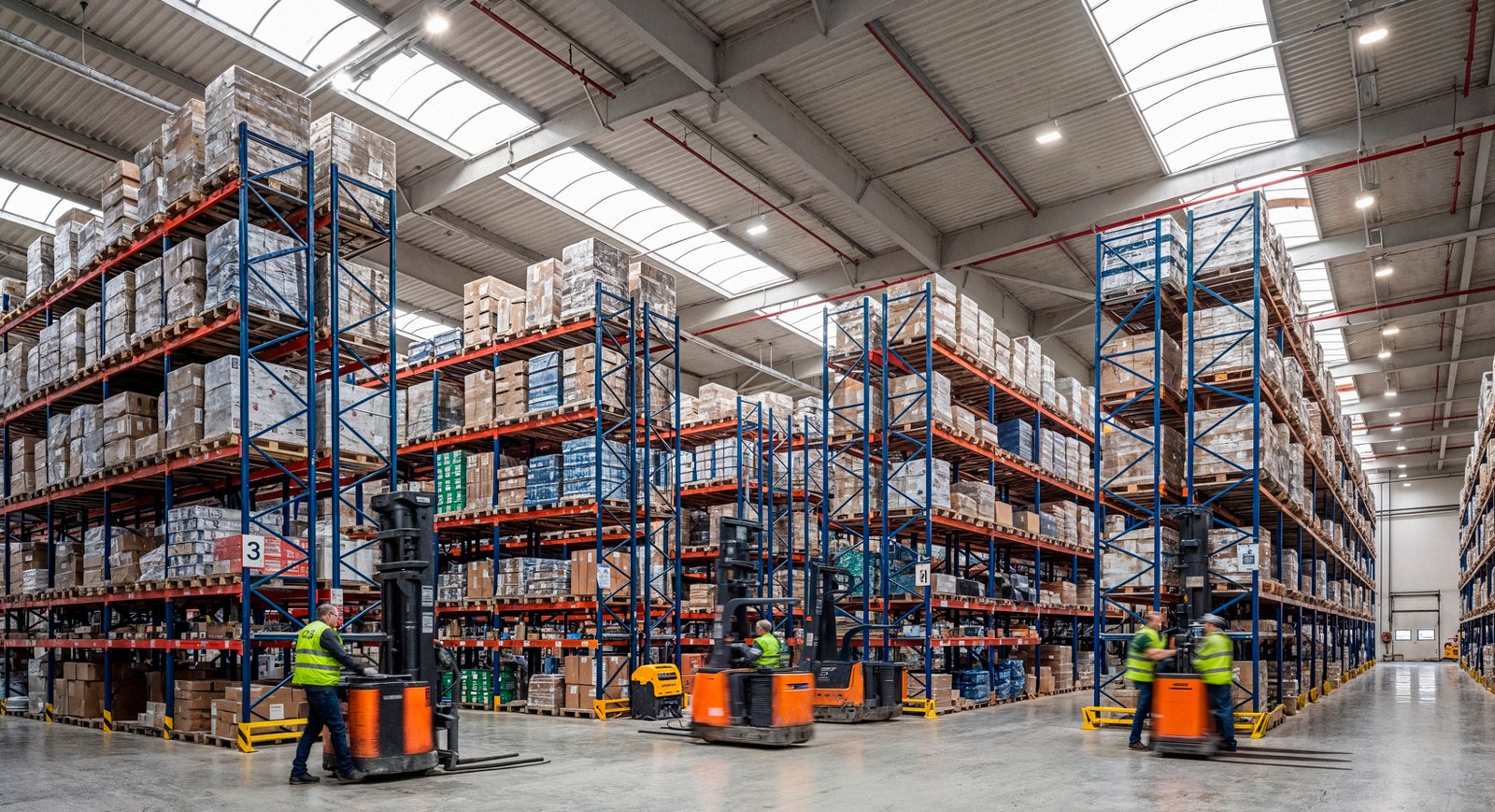
The building itself carries more equipment than a plain warehouse. Conveyors, sorters, pick modules and mezzanines call for a flatter floor, heavier electrical service and more careful fire protection. Parking is also a larger share of the plan than in a storage building, because fulfillment work is labor-intensive and shifts overlap. Delivery vans and box trucks need staging space that does not conflict with inbound trailers.
We build these facilities for retailers, third-party logistics operators and regional distributors. What follows reflects how we think about them in this market.
Starting from the order, not the building
We begin by asking how many orders ship per day, how many lines each contains and when the peak arrives. Those numbers set the size of the pack area, the number of outbound doors and the amount of mezzanine. Owners who already use a software system can share their slotting plan, and we build the floor and the structure to support it. Owners without one often benefit from a simple, flexible layout that can be rearranged.
Because equipment evolves, we favor a structure with generous column spacing and clear height, electrical capacity above current needs and a roof designed to carry future solar or mechanical loads where the owner expects them. Anything that makes the building easy to re-slot makes it easier to lease later, and that matters to developers as much as to occupants. Our distribution center page explains the neighboring approach for freight that moves in bulk.
No air cargo, but plenty of other freight options
The Brownsville/South Padre Island International Airport sits about 5 miles east of downtown Brownsville and, according to a reference source citing FAA data, handled 319,000 passengers in 2024, but no cargo carriers serve it on a regular basis. That means parcel and air-freight fulfillment in this market generally leans on trucks to reach air hubs elsewhere. A site with direct highway access matters more than a site near the terminal.
The Port of Brownsville offers other tools. It operates Foreign Trade Zone No. 62 and is served by short-line rail connecting to Class I railroads, which suits cross-border commerce and import fulfillment. The Gateway International Bridge, listed by the Town of Rancho Viejo at 12 miles away, and the Los Indios Free Trade Bridge at 18 miles give operators several crossing options. We discuss the overlap with truck terminals and cross-docks because some owners need a hybrid.
Last-mile delivery has its own geography here. TxDOT states that the Queen Isabella Memorial Causeway, built in 1974, is the only roadway access to South Padre Island, so every van headed for the island funnels through Port Isabel and across a single bridge. A fulfillment operator serving the island and the mainland towns benefits from a base near the Port of Brownsville corridor or along the highway toward Port Isabel, with van staging designed so that morning departures do not wait on each other. We lay out the dispatch yard around those routes, and we leave room for a second wave of vehicles if the business grows.
Timing a fulfillment center around peak season
Fulfillment operations have hard deadlines. Many owners want to be live before the autumn peak, which means construction must finish earlier than the occupancy date to allow racking, equipment installation and training. We work backward from that date, locking in structure, slab and long-lead items first.
In a hurricane-prone coast, we also keep an eye on the calendar. The National Weather Service recorded Hurricane Hanna’s landfall on July 25, 2020, with 7.16 to 8.65 inches of rain at Brownsville-area gauges. A job that is dry-in by summer avoids the worst exposure. Our fulfillment and logistics center construction page covers the typical schedule logic, and we adapt it to each project.
Slabs, mezzanines and the systems behind the walls
The floor receives the most attention. Automated systems often require tight flatness tolerances and joint layouts planned to the equipment. We coordinate with equipment vendors before the pour, set embeds for conveyor supports and design the slab for the heavy point loads of mezzanines and racking.
Fire protection is the next big item. High-piled storage, plastics and packaging materials affect sprinkler design and may require special systems. Electrical service sizes up quickly with conveyors, charging stations for electric lift equipment and lighting. We include provisions for future expansion and coordinate with the utility early. Also, an office and break area large enough for the shift size keeps workers comfortable, which in a hot market matters for retention.
Dock design differs from a freight terminal. Fulfillment centers receive fewer, larger inbound trailers and ship many smaller parcels or pallets out, so we often provide fewer receiving doors, more outbound positions and a staging floor between them. Lighting, ventilation and air movement matter on the pack floor, and clerestory or skylight daylighting can reduce the power bill if the roof design allows it. Safety rails, guarded mezzanine gates and clear egress routes are planned from the first sketch, because a retrofit costs more than a good layout.
Who uses these buildings in the Valley
Logistics and distribution operators are the obvious users, but retail chains, medical suppliers and manufacturers also run fulfillment centers. In a border market, importers who need to repackage or sort goods before delivering them to customers use similar space. For retail chains, see our retail chains page, since a regional store network can share one fulfillment facility.
Show us your order profile and we will size the building
Share your daily order volumes, equipment plans and preferred area. We will outline the size, structure and schedule for a fulfillment center that suits.
Questions Owners Ask
How tall should a fulfillment center be?
It depends on the system. Conveyor and mezzanine layouts can work in moderate heights, while high-bay racking and automated storage need more. We evaluate your inventory and growth plans and price a few heights.
Can I build a fulfillment center near the airport?
You can, but the airport does not currently have regular cargo carriers, so proximity does not guarantee air freight service. We usually look at highway access and the port first.
How much parking will I need?
Fulfillment is labor-intensive, so parking is a larger share than in a storage warehouse. We size spaces to your largest shift and add room for overlap, plus delivery van staging.
Does the Foreign Trade Zone matter?
It can, for operators who import goods and want to defer duties or handle them under customs supervision. We build the secure areas and fencing needed, and we coordinate with your customs advisor.
What if my equipment changes after construction?
We design with extra electrical capacity, a flexible column grid and slab provisions to reduce the cost of future changes. Re-slotting is easier when the structure does not get in the way.
Related
Related Building Types
Related Industries
Ready to talk about your project?
Request a Project Review
Planning a build in Brownsville or Cameron County?
Share the site, the building and the schedule. We will walk the drainage, soils and permit path with you and follow up with next steps.