Construction for Logistics and Distribution Owners in Brownsville
Freight owners ask where a pallet spends its time. In Brownsville the answer is often waiting: for a ship berth, a rail spot, a customs release, a truck lane on a bridge, a dock door. Buildings that shave minutes off those waits are worth more than buildings that merely look good, and that is the lens we bring to work for logistics and distribution owners.
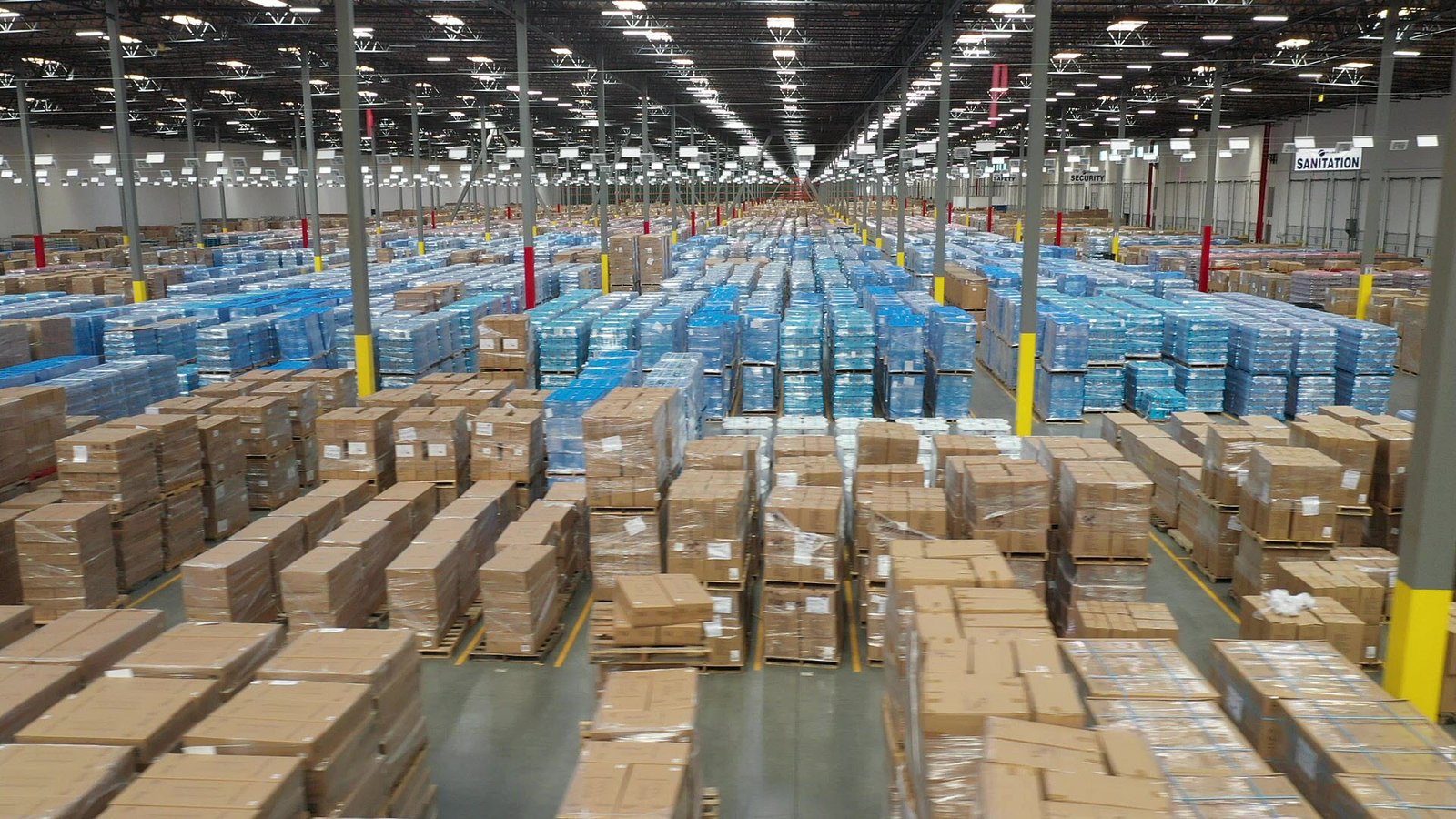
We build warehouses, cross-docks, distribution centers, fulfillment buildings, truck courts and the roads, utilities and drainage that connect them. Our clients include third-party logistics operators, freight forwarders, importers, regional distributors and the landlords who build to suit them. We know that these owners care about clear heights, column spacing, dock counts, slab flatness, trailer parking and power for yard equipment more than about finishes.
The area has a long history as a border trade gateway, and bilingual operations are the norm. Our superintendents and trade partners work in English and Spanish, which helps during the busy weeks when drivers, inspectors and subcontractors all share the same yard.
Where Rail, Ship and Bridge Traffic Meet
The lower Valley works for freight because several modes meet within a short distance. A Trade & Industry Development profile says the Port of Brownsville is served by short-line rail operated by OmniTRAX that connects with Union Pacific, BNSF and CPKC, sits 13 miles by rail and 7 miles by truck from international crossings, is Foreign Trade Zone No. 62, and recorded in 2024 a total of 2,322 vessel calls, 450,000 truck movements and 95,000 railcar movements. Few inland sites combine that range of choices.
Distances elsewhere in the metro also matter. The Town of Rancho Viejo's build-here page lists approximate distances of 11 miles to the Port of Brownsville, 12 miles to the Gateway International Bridge and 18 miles to the Los Indios Free Trade Bridge. A site on the north side of the county trades some convenience to the port for lower land cost and room to grow, and we help owners price that trade. Sites around Rancho Viejo sit in that middle ground.
From Truck Court to Racking Power
A typical logistics scope begins with the site: grading, fill, drainage, utilities, truck court paving and detention. Then comes the building, which may be tilt-wall, a pre-engineered steel frame or a hybrid, and then the interior package, which includes racking power, dock equipment, office space and life safety. Much of it falls under warehouse construction and truck courts and dock aprons.
Different logistics users need different things. A cross-dock wants many doors and little storage. A fulfillment operation wants mezzanines, conveyor power and a lot of employee parking. A cold chain operator wants insulated panels and refrigeration, which is covered in cold storage construction. We start by asking how product flows and sizing the building to match.
A Deeper Channel and a Very Large Port
The recent deepening of the Brownsville Ship Channel is an important signal. FreightWaves reported on June 28, 2026 that the roughly $295.2 million Brazos Island Harbor Improvement Project is complete, deepening the main navigation route from 42 feet to 52 feet and the entrance and jetty channels from 44 feet to 54 feet. Deeper channels can change which vessels call at the port, and distribution owners often ask how that influences warehouse demand. We cannot predict that, but we can build space that is flexible enough to follow it.
Marine Log reported in June 2025 that the Port of Brownsville covers 40,000 acres, described as the largest land-owning public port authority in the country, and that its first business park is 118 acres. Large land holdings make for competing options, and owners should compare port parcels against private sites on total cost, including fill, utilities and lease terms. Parcels at the Port of Brownsville deserve that comparison most.
Trucks, Clay and Air Freight Reality
Trucks define a logistics site. Turning radii, queuing, scale houses, gates and drop yards need to be planned before the building is drawn. Heavy trailers wear pavement quickly, so truck courts are generally concrete, and the clay subgrade needs careful preparation and moisture control. Poor drainage will wreck a yard faster than traffic, and Brownsville sits at about 33 feet of elevation with flat topography and low-permeability clay, according to a general reference, so stormwater design deserves attention from day one.
Air freight is a different case. The Brownsville/South Padre Island International Airport has two asphalt runways but, according to a general reference, no cargo carriers serve it on a regular basis. A distribution plan that depends on air cargo should be checked against that reality. Our distribution center construction team will help you test those assumptions.
Slabs and Site Work We Manage Closely
Managing the concrete and site trade partners closely, with scope, schedule and inspections held by our team, gives logistics owners the control they value. Floors in a modern distribution building have to be flat and level for narrow-aisle equipment, and joints must hold up under constant loading. Dock aprons and truck courts take punishment. Because our team schedules and inspects the slab placement and finishing, we can adjust pours around weather and keep curing consistent.
We also coordinate heavily with utility providers, since power demand for refrigeration, charging and conveyors can be large. Early service requests prevent a finished building from sitting dark. Owners who also manage tenants share many concerns with property management firms, and our experience with manufacturers helps when a building must serve both production and shipping.
Clear Height, Fill and Speed
Logistics budgets are shaped by site work and by the building envelope. Fill and paving can rival the cost of the shell, particularly on low sites. Clear height, dock count, ESFR sprinklers, lighting and slab thickness all add up. We provide cost models by option, so you can see what an extra four feet of clear height or a second row of docks really costs.
Speed has its own price. If a lease commitment drives the schedule, we can fast-track with early site packages and phased permit submissions, which cost more in coordination but protect the revenue date. We tell you where those extra costs are, and we leave out the ones that do not help.
Walk Through the Flow With Us
Tell us how product moves through the building and what the lease or contract requires. We will propose a site plan, a schedule and a cost range.
Questions Owners Ask
How close to the bridges and port should a distribution center be?
That depends on your product and customers. A site near the port has rail and ship access, while a site farther north may offer cheaper land. The Town of Rancho Viejo lists about 12 miles to the Gateway International Bridge and 11 miles to the port, so a north-county site can still serve border flows.
What does the Foreign Trade Zone designation mean for building design?
The port is Foreign Trade Zone No. 62. Inside a zone, inventory, receiving and security procedures may be set by customs rules, which can affect fencing, gates, cages and records. We coordinate with your customs advisor before the layout is final.
How do you handle poor drainage on a flat site?
We design stormwater for the site early, using the soil report and floodplain maps. In unincorporated Cameron County, the lowest finished floor has to sit 12 inches above Base Flood Elevation or 24 inches above the highest adjacent natural grade, whichever is higher, which often means fill.
Can you build a speculative warehouse that adapts to different tenants?
Yes. We recommend flexible column spacing, generous clear height, extra dock knockouts and spare electrical capacity. Those choices add some cost but widen the tenant pool.
Related
Related Services
Related Industries
Related Service Areas
Ready to talk about your project?
Request a Project Review
Planning a build in Brownsville or Cameron County?
Share the site, the building and the schedule. We will walk the drainage, soils and permit path with you and follow up with next steps.