Mass Grading and Site Preparation in Brownsville
Clay that opens cracks for 150 to 210 days in a typical year, then swells shut when the rain finally arrives, is the ground a great deal of Cameron County is built on. The USDA series description for a clay soil it calls extensive in south Texas puts the clay content at 60 to 75 percent, with slickensides starting 20 to 30 inches down and very slow permeability. Whatever your pad is going to carry, that soil is what the first week of mass grading has to deal with.
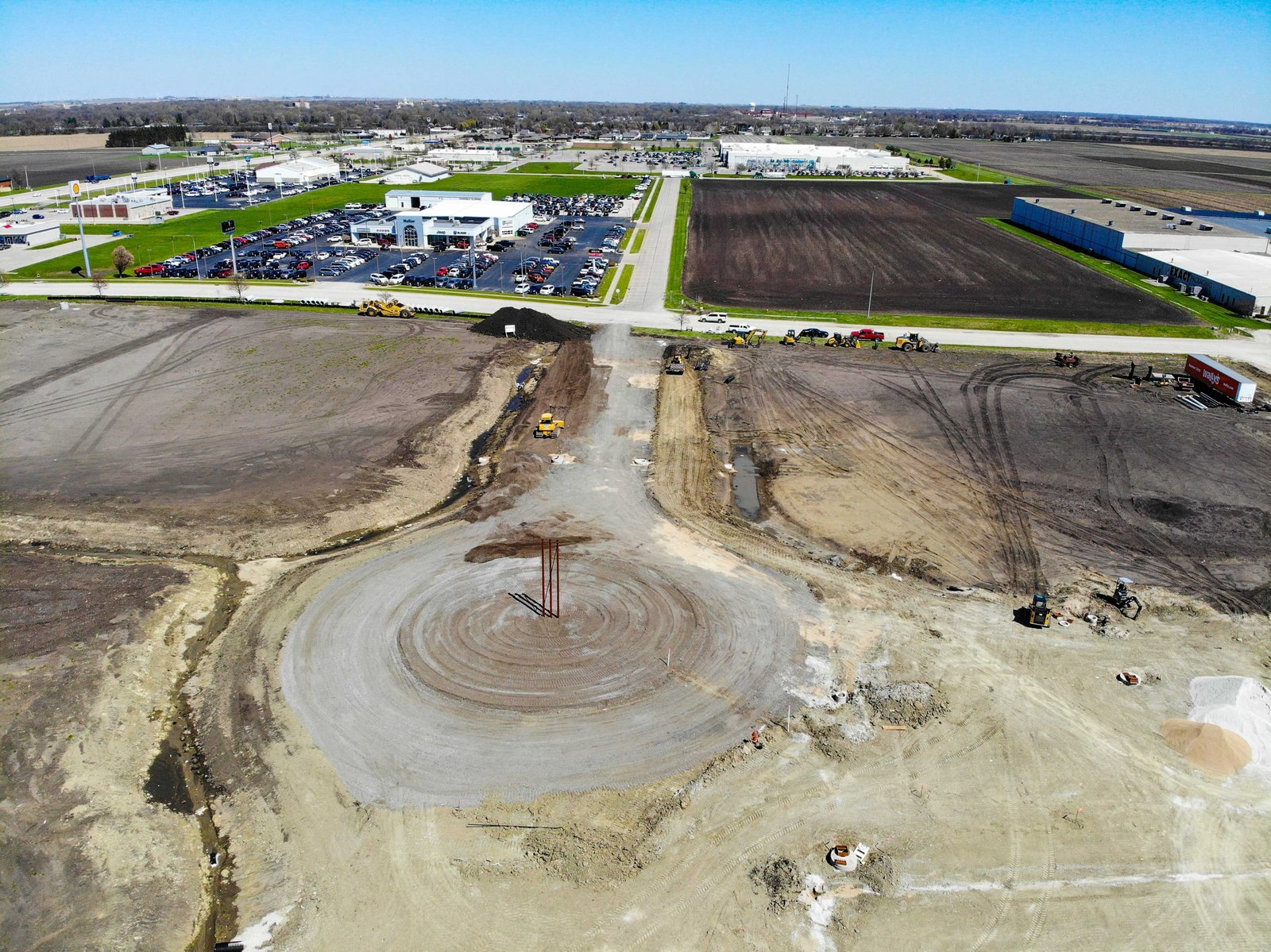
Mass grading is the bulk earthwork that turns raw acreage into a buildable platform: stripping topsoil, cutting high spots, filling low ones, compacting every lift and shaping the surface so water leaves the site on purpose. On a project near the coast it also sets the finished-floor elevation that insurance, flood rules and the lender will all ask about later. We plan it as part of the building, not as a separate chore that happens before the building starts.
Below is how we approach grading for owners, developers and public agencies working in Brownsville, Los Fresnos, Rancho Viejo and the communities around them, and what tends to drive the schedule and the price.
What bulk earthwork covers on a Valley site
The sequence starts with clearing and stripping, then proof-rolling the exposed subgrade so soft pockets show themselves before fill goes down. Cut-to-fill balance comes next. On flat coastal plain ground there is often little to cut, so imported select fill becomes the main material, and its source, haul distance and moisture condition set much of the cost. We place fill in thin lifts, test density as we go and keep a record of each lift so the engineer of record has something firm to sign.
Grading also reaches beyond the building pad. Detention basins, swales, access roads, truck-court subgrades and the berms that screen a yard all belong to the same earthwork package. Where the pad will receive a slab, the trade team for concrete foundations works from the same elevations, and where underground piping follows, the trench grades have to agree with what we have just shaped on top.
Clay that moves, and what the geotechnical report tells us
A published description of Brownsville soils says they are mostly clay to silty clay loam and moderately to strongly alkaline, with a pH between 8.2 and 8.5, on a city sitting at about 33 feet above sea level. Those are general numbers, not a substitute for your own borings. We want the geotechnical report in hand before we price, because it decides whether the clay can be conditioned in place with lime or cement, whether a moisture-conditioned cap is required, or whether the engineer wants a deeper over-excavation under heavily loaded areas.
Where the report points to deep movement, grading alone will not solve it. A pad can be built flat and compacted perfectly and still heave with the seasons if the foundation does not respect what lies underneath, which is why we talk with the foundation designer early about deep drilled pier foundations when a heavy structure is planned. The grading contractor and the structural engineer should be reading the same page.
Managing the grading work on the dirt
Earthwork depends on the weather, moisture and a clear sequence. We coordinate the earthwork trade partner's operators, compaction equipment and water trucks against the site schedule and inspection requirements. When a front moves in off the Gulf, the foreman and project contact review the forecast and test results before deciding whether to roll the surface, seal it and shed water, or leave a lift open. The agreed work and restart conditions are recorded before the next shift.
Site communication covers safety instructions, haul-route changes and the stop-work call for wet subgrade. Briefings and updates must be understood by the people doing the work, with language needs confirmed during mobilization. Developers in Los Fresnos and owners elsewhere receive a look-ahead that identifies rain-sensitive work, inspection holds and the handoffs required before grading resumes.
What moves the grading number
Four things dominate the price. The first is how much fill has to be imported and how far it travels. The second is how wet the site is when we begin, since saturated clay cannot be compacted until it dries or is treated. The third is the required finished-floor elevation. In unincorporated Cameron County the rule is a lowest finished floor at least 12 inches above the Base Flood Elevation or 24 inches above the highest adjacent natural grade, whichever is higher, and in a flat county that second number can mean a lot of fill.
The fourth is the water the site has to manage during construction. Erosion control, dewatering at low corners and haul-road maintenance are real line items, and an honest estimate shows them. Once the numbers are firm we hold the scope tight, so the sitework you see in the contract is the sitework you pay for. If you are comparing bids, ask each bidder how it plans to handle a three-inch rain in week two.
Heat, dust and heavy equipment
Grading puts large machines close together and often close to the public, so we plan truck routes, spotters and flagging before the first scraper turns. Summer heat in the Valley is its own hazard for operators and laborers, and we schedule water, shade and rest breaks as part of the work, not as an afterthought. Dust control with water trucks protects neighbors and keeps us on good terms with them, particularly near schools and homes.
Stormwater pollution prevention is part of the same discipline. Silt fences, inlet protection and stabilized construction entrances are inspected after every significant rain and repaired the same day. If your site shares an edge with a drainage ditch or a resaca, that edge gets extra attention, because that is where complaints and fines come from. A tight site is also a site that is easier to hand over to the stormwater and drainage work that follows.
Tell us about the ground you are building on
Send us the survey, the geotechnical report if you have one, and the date you need a pad ready. We will walk the site, talk through fill sources and flood elevations, and give you a plain grading plan in English or Spanish. Warehouse and flex owners can read more on warehouse pads. For related work, see our commercial real estate developer services.
Questions Owners Ask
How long does mass grading take for a typical commercial pad?
It depends on acreage, fill volume and weather, but plan on weeks rather than days for anything beyond a small pad. Stripping and proof-rolling go quickly. Placing and testing lifts of imported fill takes longer, and every significant rain can stop compaction for a day or more while clay dries. We give you a schedule that shows weather float, not a best-case line.
Do I need a geotechnical report before you can price grading?
Yes. We can give a budget range without one, but a firm number needs borings, moisture content and the engineer's recommendations for subgrade preparation. The clay in this area behaves differently from one site to the next, and a surprise under the pad is expensive. We can coordinate the geotechnical firm for you if you do not already have one.
Can you grade a site in the rainy season?
We can, but we price and schedule it differently. Wet clay needs treatment or drying time, haul roads need extra stone and erosion controls need more attention. If your timeline is flexible, starting earthwork in a drier stretch usually saves money. If it is not flexible, we plan for dewatering and protected stockpiles from the start.
What elevation should my finished floor be?
That comes from your engineer and the authority having jurisdiction. In unincorporated Cameron County, new construction in a flood-prone area must sit at least 12 inches above the Base Flood Elevation or 24 inches above the highest adjacent natural grade, whichever is higher. Inside a city, confirm the rule with that city's building department, because it may differ.
Who approves the compaction and fill?
A third-party testing laboratory hired by you or by us, working to the engineer's specification, takes density readings and reports pass or fail by lift. We do not move on until the numbers pass. You receive the reports as part of closeout, which matters later when a lender, an insurer or a buyer asks how the pad was built.
Related
Related Services
Related Building Types
Ready to talk about your project?
Request a Project Review
Planning a build in Brownsville or Cameron County?
Share the site, the building and the schedule. We will walk the drainage, soils and permit path with you and follow up with next steps.