
Commercial Demolition in Brownsville and Cameron County
Before any excavator touches a wall, a demolition job has already done most of its work on paper: an asbestos and hazardous materials survey, utility disconnects confirmed in writing, a permit in hand, a dust and drainage plan and a clear answer to the question of where the debris goes. Demolition looks like the fast, loud part of a project. The careful part happens before anyone fires up a machine.
In the lower Valley, demolition often follows weather. When Hurricane Hanna passed in July 2020, the National Weather Service reported an EF0 tornado about 4.7 miles east-southeast of Brownsville that took sections of roof off two homes and blew windows out of an airport hangar, and noted many poorly built structures damaged across Cameron County, mainly roofs. Storm-damaged buildings that cannot be economically repaired need to come down safely, and owners need the site ready for what comes next.
We demolish commercial, institutional and multifamily buildings, from full structure removal to selective interior strip-out, and we clear sites for new construction. Here is how we plan and run it.
The survey comes first
Buildings from earlier decades may contain asbestos in floor tile, mastic, insulation, roofing and texture coatings, and lead in paint. Federal and state rules require an inspection before demolition of most commercial and multifamily buildings, abatement by licensed contractors where regulated material is found and the required notification before work starts. We do not skip this step or let it slide to the end of the schedule, because discovering regulated material after the building is half down is the single most expensive surprise in the trade.
Once the survey and abatement are done, we confirm that gas, electric, water, sewer and communication services are cut and capped at the right point. Fuel tanks, refrigerants, mercury switches and fluorescent lamps are removed and handled according to the rules. Only then do the construction trade partners and equipment enter the structure. Dust suppression, hearing protection and heat management are part of the daily plan.
How a structure comes down
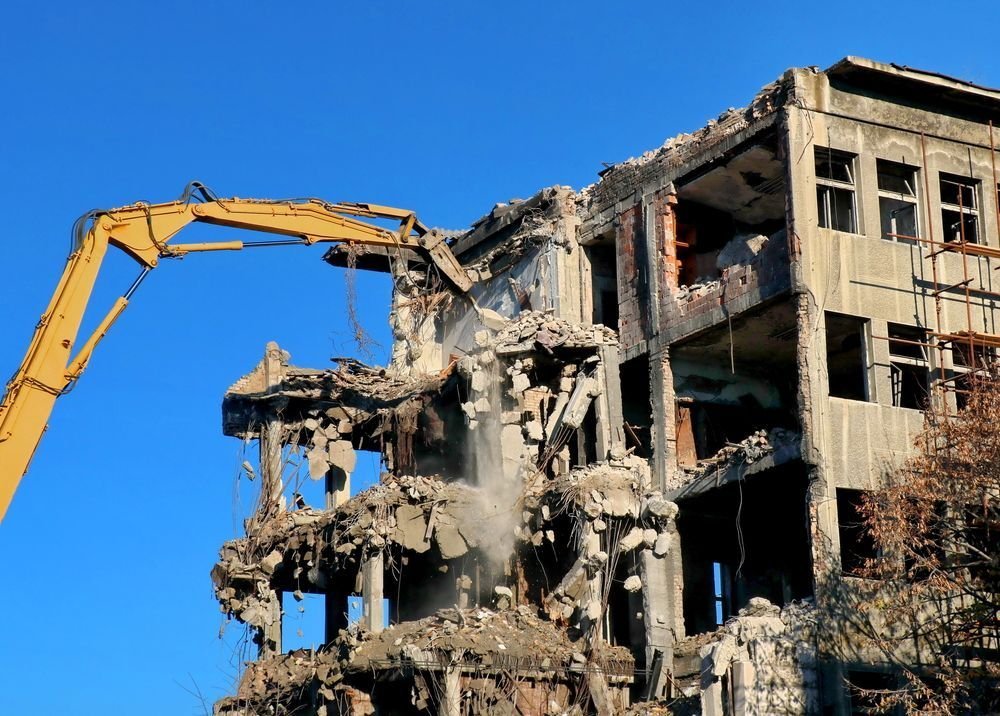
The sequence typically goes from the inside out and from the top down. Interior strip-out removes finishes, fixtures and equipment. Roofing and decking come off next, then upper floors and walls, and finally foundations, slabs and below-grade elements. Machines with shears, grapples and hydraulic hammers handle structural steel and concrete, and material is sorted as it is removed so steel, concrete, wood and metal can be recycled or hauled to the right facility.
Selective demolition inside an occupied building is a different craft. Saw cutting, hand demolition and local protection let a tenant space be gutted without disturbing neighbors. This kind of work feeds renovation and adaptive reuse and tenant improvements, and we plan it with the finishing trades so openings, shoring and temporary protection are in place before the first cut.
Water, debris and the neighbors
Demolition leaves exposed ground, and on flat Valley terrain that ground sheds water slowly. Silt fences, inlet protection and stabilized exits keep sediment out of storm drains and resacas. If the building sits near the coast, rainfall can arrive quickly and in volume. The Port Isabel-South Padre Press reported nearly three inches of rain in under three hours in May 2021, and an open demolition site during a storm like that is a pollution risk if it is not protected.
Debris is the other logistical item. Concrete can often be crushed on site and reused as base material, while mixed waste must be hauled and weighed. Haul routes, truck counts and hours of work are discussed with neighbors and the city. We talk to adjacent owners before starting, share a phone number and keep the street clean. Blasting is not part of our scope. We take buildings down mechanically and with care.
Permits and pre-demolition requirements
A demolition permit is required from the city or county, and the review often confirms utility disconnection, asbestos compliance and erosion control. In unincorporated Cameron County, the flood damage prevention rules also apply to land in a mapped floodplain, and the County Engineer is the Floodplain Administrator. Historic buildings, buildings next to a protected resaca or a school zone can add review steps.
Demolition is also a common precursor to new construction, so the site plan, the permit for the new building and the demolition schedule need to line up. Our permitting and entitlements team coordinates them so that the lot does not sit empty waiting for an approval. In waterfront areas with special districts, the redevelopment plan may have its own standards for site clearing and what replaces the old building.
Where we take buildings down
We work across Brownsville, Los Fresnos, Rancho Viejo, Port Isabel and South Padre Island. Port Isabel is a good example of how redevelopment follows demolition: Cameron County lists Port Isabel tax increment reinvestment zone number one, known as Modern Venice, with 75 percent county participation through December 31, 2042 and listed projects of $16,945,000, and sites inside a zone like that often change use. Our Port Isabel page describes local conditions.
At the airport, the same National Weather Service report that records the Hanna tornado notes a 737 was moved into a hangar, a reminder that aviation facilities have special requirements for demolition near active airfields, which we coordinate with airport management. Property owners in the port area can also see our approach to Brownsville and to logistics and distribution users who clear land for new buildings.
Show us the building and the plan for the site
Tell us what is coming down, what is going up in its place and when. We will arrange the survey and give you a clear scope and schedule. Public owners can also see how we serve government and public sector clients.
Questions Owners Ask
What does demolition cost?
The range is wide. It depends on the size and structure type, the presence of regulated materials, access, recycling opportunities and haul distance. A written survey is the first step to a firm price. We provide separate lines for abatement, demolition, hauling and site restoration.
How long does it take?
A small commercial building may come down in days once permits, disconnects and abatement are complete. Larger structures take weeks. Most of the calendar time is in the preparation: surveys, permits and utility work.
Do you handle asbestos?
We coordinate it. Licensed abatement contractors remove regulated material under their own certifications, and we confirm clearance before demolition begins. Never let a contractor demolish a building without a survey.
Can I reuse the concrete?
Often yes. Clean concrete can be crushed to make base material for the new parking or pad, which saves hauling and import costs. The engineer must approve the material and gradation for the intended use.
What is left when you finish?
Typically a graded, stabilized site free of debris, with utilities capped and erosion controls in place, ready for the next stage. We document the condition with photos and, if needed, a survey so there are no disputes about what was removed.
Related
Related Services
Related Industries
Related Service Areas
Ready to talk about your project?
Request a Project Review
Planning a build in Brownsville or Cameron County?
Share the site, the building and the schedule. We will walk the drainage, soils and permit path with you and follow up with next steps.