
Parking Lot Construction in Brownsville and South Padre
Growing an exhibit hall from about 22,000 to about 50,000 square feet, as a concept presented in March 2026 for the South Padre Island Convention Centre would do, is the kind of project that quietly doubles the question of where everyone parks. The island has one causeway, limited land and a visitor economy that peaks on the same weekends. Every new seat in a building has to be matched with a space somewhere, and the lot has to drain, stripe, light and meet accessibility rules.
Parking lot construction looks simple from the street. Underneath, it is subgrade, base, pavement, curbs, drainage, lighting conduit, accessible routes and a striping plan that has to match the approved site plan to the inch. We build new lots, expansions, overlays and full reconstructions for retail centers, medical offices, schools, hotels and multifamily projects across Cameron County.
Below is how we approach the work, where the code lines are and what drives the price of a lot in this climate.
From stripped dirt to striped stalls
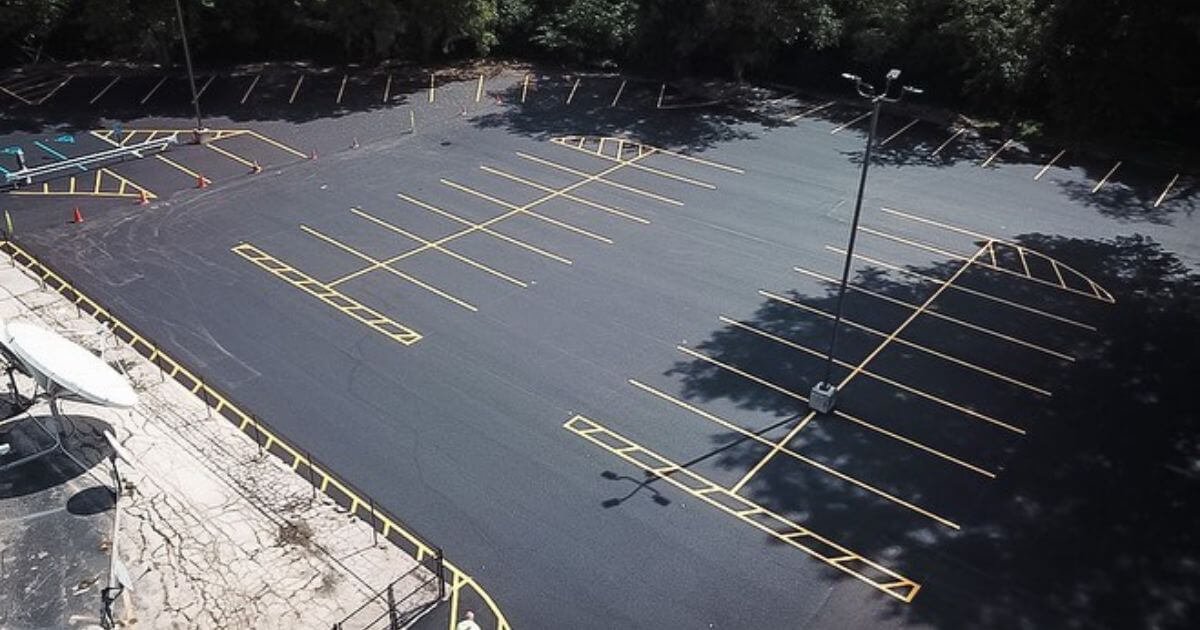
The sequence mirrors a road. We strip and proof-roll the subgrade, treat or replace weak clay, place and compact a flexible base, set curb and gutter, install inlets and utility crossings and then pave. Asphalt is the common surface for parking fields, with concrete used at entries, trash enclosures, dumpster pads, drive-through lanes and anywhere trucks turn repeatedly. After paving come wheel stops, striping, signage, accessible ramps and pavement markings.
Lighting, landscape islands and irrigation sleeves are best coordinated before the base goes in, so nobody cuts new pavement the week after it is laid. Where trucks serve the building, we tie the lot into truck courts and dock aprons, and where fill is needed to bring a pad above flood grade, we start with mass grading to build a stable working platform.
Accessibility, stormwater and the permit path
Parking lots are heavily regulated, mostly for accessibility. The Texas Department of Licensing and Regulation states that the 2012 Texas Accessibility Standards apply to projects registered, permitted or constructed on or after March 15, 2012, and that projects costing $50,000 or more must be submitted to the department for registration and review. Accessible stalls, aisle widths, slopes at ramps and route continuity are measured in fractions of an inch, so we lay them out with a level and a template, not by eye.
Stormwater rules come next, since paving increases runoff and detention or a connection to a municipal system is nearly always involved. Parking counts and landscape ratios are set by the city or county. We help sort out the approvals, working with your engineer and our permitting and entitlements specialists, so the plan you pay for is the plan that gets built.
What a lot costs and why
The largest drivers are area, section thickness and subgrade condition. A parking lot over soft clay may need a thick stabilized base to avoid rutting and pumping, and that base can cost as much as the asphalt on top. Drainage structures and pipe, curb length, lighting and accessible features follow. Fuel and asphalt binder prices move and we state clearly how they are handled in a contract.
Value comes from design choices as well. A slightly smaller drive aisle, a better layout for stormwater or a concrete apron at the dumpster can save more over the lot's life than any bid discount. We offer alternates, such as a thicker section at heavy truck routes only, so owners can match spending to risk. For a school or medical office, long-term maintenance cost is often as important as first cost, and we help you see both.
Paving around a business that stays open
Many of our parking projects happen at shopping centers, schools and offices that cannot close. We phase work by sections so customers or students always have somewhere to park and a safe route to the door. Night work is available for retailers who sell all day. Walk-off barricades, signs and flaggers are set daily, and each section is opened as soon as it can carry traffic.
Weather decides the pace. Asphalt requires dry subgrade and adequate temperatures, and the long rainy spells in this area can idle a crew for days. We build float into the schedule and hold a standing call with the owner when the forecast changes. On university campuses, a parking project should fit the academic calendar, which is why campus projects, like those we describe for UTRGV Brownsville, begin the timing conversation early.
Lots across the island, the port and the mainland
We build parking in Brownsville, Rancho Viejo, Los Fresnos, Port Isabel and on South Padre Island. Barrier-island lots have unique constraints, including salt air, limited laydown space and a single causeway for deliveries, so crews and materials are scheduled around visitor traffic. Our South Padre Island page covers how we work there.
On campuses, the Texas Department of Licensing and Regulation lists a 46,000-square-foot Visual Arts Complex for UTRGV Brownsville as a $21 million public project, and new buildings of that kind bring new parking and circulation needs. Retail owners can read our approach for retail chains, while institutional owners will find similar thinking on our page for education institutions.
Plan the parking before the building
Send us the site plan and tell us how many stalls and what kind of traffic you expect. We will recommend a pavement section and give you a price and schedule that respects your operations. Also read about our retail shopping center work.
Questions Owners Ask
Asphalt or concrete for a parking lot?
Asphalt is the usual choice for parking fields because of cost and speed. Concrete is better for trash enclosures, drive-through lanes, bus pull-ins and places with heavy turning loads. We often combine them. A life-cycle comparison shows which makes sense for your use and budget.
How long does it take to build a new lot?
For a typical retail or office lot, a few weeks of active work after grading and utilities, plus time for weather and inspections. Phased projects at occupied sites take longer. We provide a day-by-day plan so tenants know what to expect.
What are the accessibility requirements?
Texas Accessibility Standards apply, and projects costing $50,000 or more must be submitted to the Texas Department of Licensing and Regulation for registration and review. Your design professional files it. We build the stalls, aisles and ramps to the approved drawings and check slopes before paving.
Can you repave my lot without tearing out everything?
Sometimes. A mill-and-overlay can work if the base is sound and the drainage is fine. If there are potholes, alligator cracking or standing water, the base is likely failing and needs rebuilding. We test and show you cores before recommending.
How do you keep drainage from ponding?
Careful grading, proper curb inlets and sufficient slope, usually at least one percent on asphalt and more on concrete. After paving we check by level and by water test. If your lot floods, tell us where; many problems are small elevation errors we can fix.
Related
Related Services
Related Building Types
Related Industries
Related Service Areas
Ready to talk about your project?
Request a Project ReviewPlanning a build in Brownsville or Cameron County?
Share the site, the building and the schedule. We will walk the drainage, soils and permit path with you and follow up with next steps.