Data Center Construction in Brownsville and the Valley
Uptime on the Gulf coast starts with elevation, wind and where the water goes, and only after that with power and cooling. The National Weather Service estimated that Hurricane Dolly, on July 23, 2008, pushed a storm surge of about 4 feet and a storm tide of 5 feet at the entrance to the Port of Brownsville Ship Channel. A building that must stay online through a storm has to be designed for that kind of event, not hoped through it.
We do not claim a published wave of data center projects in Brownsville, and we will not invent one. What we can say is that owners who want a secure, resilient facility in the Rio Grande Valley will find a builder here who understands the coastal plain, the hurricane wind rules and the long lead times for electrical gear. A data hall is a very precise building inside a very ordinary shell, and we pay attention to both.
Below we describe how we approach the site, the structure, the envelope and the handover, with the details a technical owner or a hosting operator would ask about.
Siting a critical facility near the coast
The first decision is the parcel. Elevation matters, drainage matters and so does the route of the utility feeds. The National Weather Service reported that Hurricane Hanna, which made landfall on July 25, 2020, brought 7.16 to 8.65 inches of rain at Brownsville-area gauges between July 24 and 29, and that an EF0 tornado blew windows out of an airport hangar east of town. Those figures suggest what a roof, a wall and a generator pad should be built to withstand.
We look for ground that drains away from the building and a pad raised above surrounding grade, with generators, fuel storage and switchgear placed above likely water. We also look for road access that works when a storm is on the way, because fuel deliveries and staff have to reach the site. The Port of Brownsville covers 40,000 acres and its first business park is 118 acres, so there is large industrial land in the county, though each parcel needs its own review of flood status, utilities and access.
Wind certification and local review
The Texas Department of Insurance states that beginning April 1, 2026, Windstorm Certificate of Compliance applications must be certified under either the 2024 International Residential Code or the 2024 International Building Code, and that the Designated Catastrophe Areas did not change with the new codes. Cameron County and Willacy County have their own zone pages. For a data center, that means the envelope, roof system and all rooftop equipment supports are engineered to a specific wind standard, and the paperwork is part of the schedule.
The local building code is the other piece. State law sets the 2012 International Building Code as the municipal floor, and cities may adopt later editions, so the governing edition depends on the jurisdiction. We confirm it before pricing. Texas also applies the Texas Accessibility Standards to projects registered or built after March 15, 2012, and projects costing $50,000 or more are registered with the state. Even a lightly staffed facility has an office, a restroom and an entrance that must comply.
The building inside the building
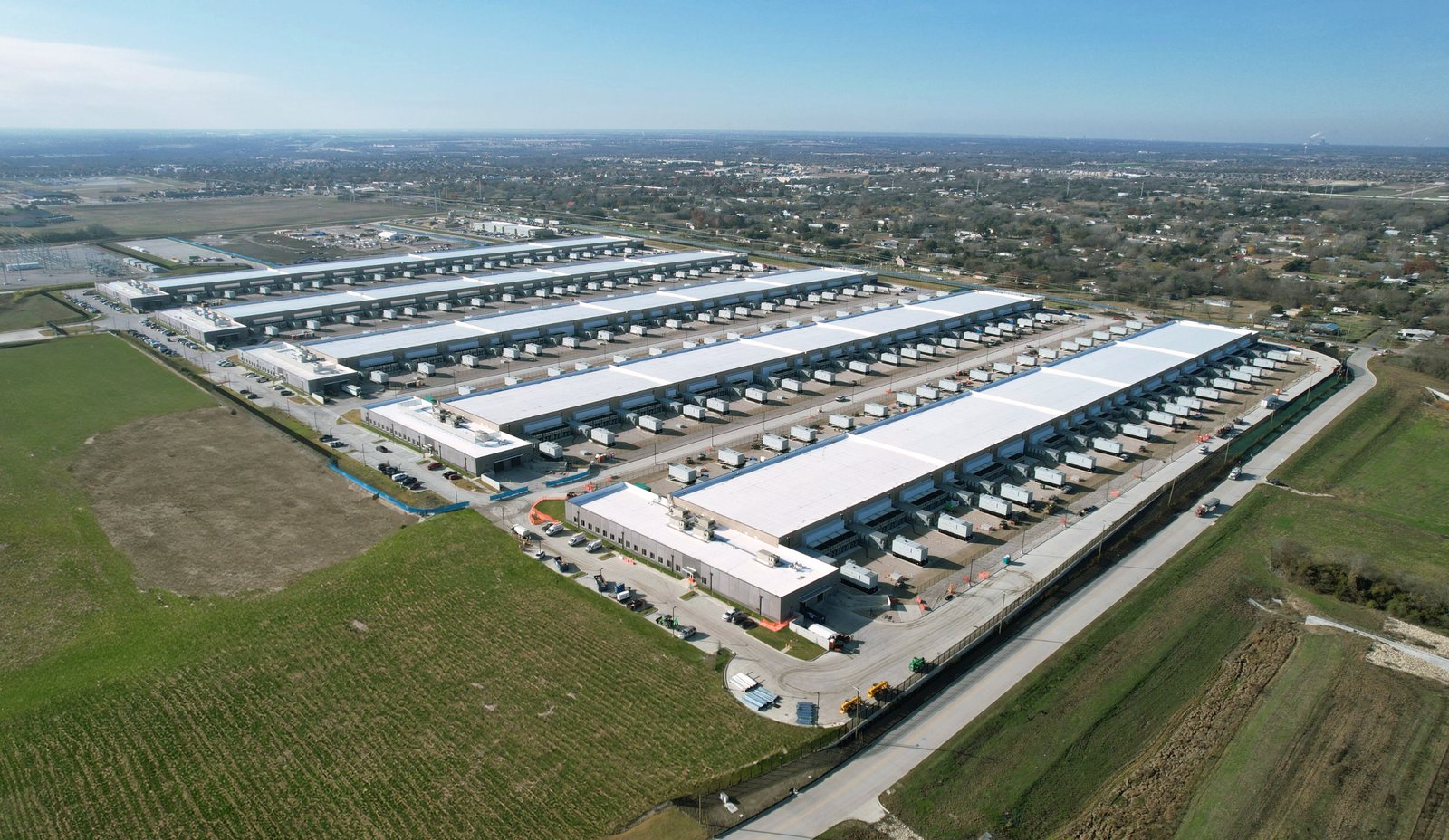
A data center shell is typically concrete or steel, with a roof designed for heavy rooftop cooling and a floor slab that can carry racks, batteries and generators. Inside, the work is divided into the white space where servers live, the gray space for power and cooling, and the support areas for operations and security. We build the shell, the slab, the structured pads for exterior equipment and the secure perimeter, and we coordinate with the owner's mechanical, electrical and IT vendors so that chases, sleeves and clearances are right the first time.
Underground work matters too. Duct banks, fiber conduits, fuel lines and drainage must be placed before paving and landscaping, and a missed conduit is expensive to correct. The trade partners for site development and utilities place those systems under a coordinated drawing set, and our pre-engineered metal buildings work offers an economical shell option for owners whose design can use one.
Security, safety and a clean site
A critical facility is built under rules that most construction sites never see. Access to the site is controlled, deliveries are logged, and the finished building has to be kept free of dust and moisture while systems are being installed. We plan temporary protection for electrical rooms, keep slabs sealed, and sequence wet trades well before delicate equipment arrives. Workers on site receive orientation and follow the owner's security rules, and the construction trade partners make sure instructions are understood by everyone on the team.
Hot work, crane picks and energized equipment each carry their own risks. We hold regular safety meetings, require lockout practices on any live system and coordinate with the owner's electrical commissioning agent so that testing does not endanger the trades still working nearby.
Procurement and commissioning
Electrical gear, generators and cooling plant carry lead times that can exceed the building schedule. We treat that as a first-order issue and run long-lead procurement from the start, tracking submittals, fabrication dates and delivery windows alongside the construction schedule. When the building is ready for testing, our commissioning and closeout process lines up the integrated tests, punch lists and training that the owner needs to take possession.
Developers who want a powered shell for lease will find the same approach works, and we talk through the options with commercial real estate developers who need to define a base building and tenant scope before a tenant is signed. The data center building type page lays out what owners typically want to see in a first conversation.
Start with the site
Send us the parcel, the power target and the timeline. We will tell you what the ground, the weather and the permit path will ask of the project.
Questions Owners Ask
Is there existing demand for data centers in Brownsville?
We are not aware of public announcements we can cite, and we do not speculate. We can assess a specific site and project and give you a clear view of the construction side.
How do hurricane rules affect a data center?
They shape the roof, walls, doors and rooftop equipment, and they add certification paperwork. The Texas Department of Insurance windstorm program requires certification under the 2024 codes for applications from April 1, 2026, so we plan for it at design.
Where should generators and switchgear go?
Above likely flood levels and away from the primary flow of surface water. We usually raise the pad and place conduit with enough fall to keep water out.
How long does electrical equipment take to arrive?
Lead times vary by item and manufacturer, and large transformers and switchgear can take many months. We confirm current quotes during design and build the schedule around them.
Can a metal building serve as a data center shell?
Sometimes. A well-designed pre-engineered building can deliver the clear space and a good roof for equipment, provided the loads and wind rating are engineered for it. We compare options with your design team.
Related
Related Services
Related Building Types
Ready to talk about your project?
Request a Project Review
Planning a build in Brownsville or Cameron County?
Share the site, the building and the schedule. We will walk the drainage, soils and permit path with you and follow up with next steps.