Automotive and EV Plant Construction in the Brownsville Area
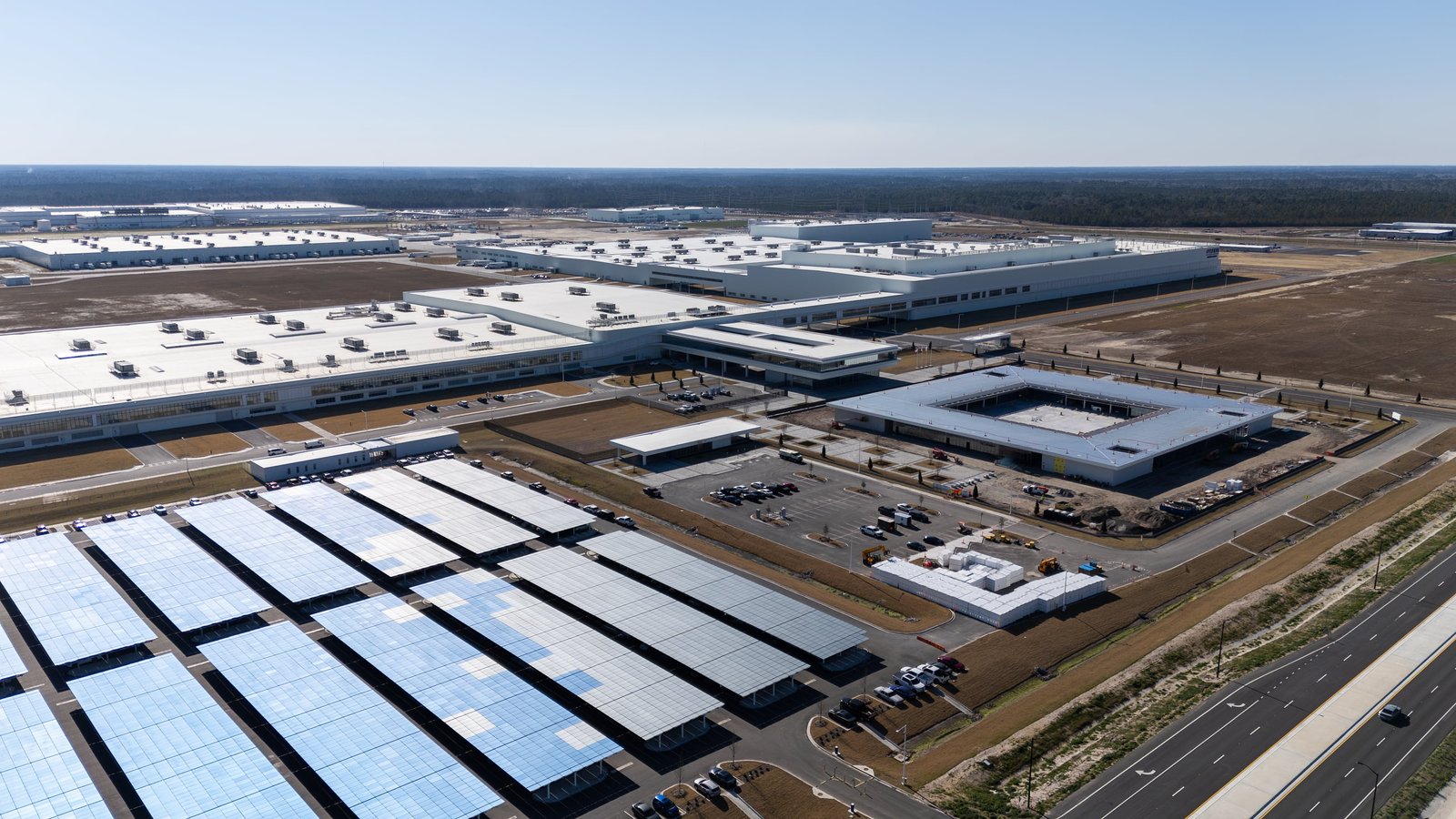
We have found no automotive or EV assembly plant in the Brownsville facts we rely on, and we would rather say that plainly than dress up a market that has not shown one. What the record does show is a southern Texas port district where very large industrial buildings are being planned and permitted, and an automotive or battery plant would draw on the same trades, the same slab and crane methods and the same freight corridors.
So this page does two jobs. It describes what a plant of that kind asks of a builder, in general terms, and it lays out what is actually documented here about big manufacturing buildings, soils, storm exposure and trucking, so that an owner weighing a site near the Port of Brownsville or along the Interstate 169 corridor can see the ground conditions honestly.
If you are considering a vehicle, battery, component or supplier facility in the Valley, call us early. We would rather help you test the site than sell you a story about it.
What the record does and does not show
The documented activity is heavy industry, not vehicles. A Marine Log report from June 2025 says the Port of Brownsville covers 40,000 acres, the largest land-owning public port authority in the country, and that a steel company is investing $85 million in a 650,000-square-foot facility there expected to create more than 600 direct and indirect jobs. Texas Department of Licensing and Regulation records list a new 700,000-square-foot specialized industrial manufacturing building at Starbase estimated at $250,000,000. Those are not car plants, and we do not suggest otherwise, but they are the nearest comparable shells in the Brownsville area.
That is as far as the facts take us. We hold nothing on automotive suppliers, battery makers, dealer networks or vehicle assembly in this market, so we do not claim a local supply chain for one. Owners in manufacturing would need to bring the end-user requirements, and we would then test them against the port, rail and highway facts below. Our manufacturing plant page covers the general industrial case in more detail.
Which parts of a vehicle plant we would plan for
An assembly campus is several buildings pretending to be one. A stamping or body shop wants heavy foundations under presses and robotic cells, deep pits and generous overhead cranes. A paint shop wants tight air handling, large exhaust and a clean-finish envelope. Final assembly wants a long, flat, loaded slab with conveyors and sequencing space, and a battery or electronics line wants controlled humidity, high-capacity power and fire protection tuned to the cells. Each has its own structural logic, and each shows up in the budget differently.
Around those sit the quieter buildings that decide whether the plant can run: a truck court with enough dock doors, an inbound parts warehouse, an energy yard and an employee entrance with parking. Owners often treat the supplier park as an afterthought, but a tier-one component plant is frequently a smaller light industrial building or a warehouse with a special floor, and those can be delivered much sooner than the main line.
Codes, flood rules and the approvals that set the clock
Texas has no single statewide commercial code applied in every city. Local Government Code Sec. 214.216 sets the 2012 International Building Code as the municipal floor, and a city may adopt later editions by ordinance. The factbase could not confirm which edition the City of Brownsville has adopted, so we confirm that with the Building Permits and Inspections Division at the start of every job rather than assuming. In unincorporated Cameron County, the county's flood regulations name the County Engineer as Floodplain Administrator and require the lowest finished floor in a flood prone area to be 12 inches above Base Flood Elevation or 24 inches above the highest adjacent natural grade, whichever is higher.
Wind is the other gate. The Texas Department of Insurance says that starting April 1, 2026, Windstorm Certificate of Compliance applications must be certified under the 2024 International Residential Code or the 2024 International Building Code, and Cameron County is covered by the windstorm program. A plant with a large roof area and tall walls has to be designed with that in mind, which reaches into the structural frame, the cladding attachments and the roof system. We bring the engineer in before the layout is frozen, not after, and our permitting and entitlements work keeps the jurisdictions in the right order.
Heavy lifts, hot work and a coastal plain that floods
Plant construction is crane work. Steel erection, rooftop equipment sets and the placement of process equipment all depend on level pads that bear weight in wet weather, and the soil here makes that a real concern. Brownsville soils are mostly clay to silty clay loam, and an official soil series description for a common south Texas clay lists 60 to 75 percent clay, very slow permeability and cracks that stay open about 150 to 210 days in most years. Those same cracks close when the clay swells, which is why we like deep or stabilized crane pads and a drainage plan in place before the first lift.
Storm exposure belongs in the safety plan too. The National Weather Service reported that Hurricane Hanna dropped 7.16 to 8.65 inches of rain on Brownsville-area gauges in a few days in July 2020, and a June 2018 flood put more than 7,400 homes and businesses across Cameron and Willacy counties into minor to destructive flood damage. A site team with a written weather plan, bilingual crew briefings and a place to stage laydown above standing water loses fewer days. It is dull work, and it pays.
Where the money goes on a large industrial shell
The first cost driver is the ground. Mat or heavily reinforced slabs, pile or drilled pier foundations in expansive clay and a raised building pad for flood freeboard can rival the building frame itself on a heavy process plant. The second is power and utilities, because a vehicle or battery line can demand electrical capacity that a rural substation does not have, and the extension is rarely quick. The trade partners for site development and utilities price those two items first and the building second.
Freight shapes the third. A Trade and Industry Development profile says the Port of Brownsville recorded 450,000 truck movements and 95,000 railcar movements in 2024, is served by short-line rail connecting with Union Pacific, BNSF and CPKC, and is Foreign Trade Zone No. 62. Inbound parts and outbound product have to move on that network, so dock count, rail spur geometry and truck court paving are sized to the volume. We also keep an eye on long-lead procurement, since presses, transformers and crane rails can set the schedule more than any construction task.
Test a plant site with us before you buy it
Send us the product, the building area you imagine and the parcel you are considering. We will tell you what the soils, flood rules and utilities mean for the budget, and we will say plainly where the Brownsville record gives us no support.
Questions Owners Ask
Is there an automotive or EV plant in the Brownsville area?
None appears in the sources we use, so we do not say there is one. The documented large buildings near the port and at Starbase are steel, shipbuilding and specialized industrial manufacturing. If you are planning a vehicle or battery facility, treat the local supplier base as something to verify yourself. We can help you test the site and the building, not the supply chain.
What size building does a vehicle plant need?
It depends on whether you mean final assembly, a body shop, a battery line or a component plant. A Marine Log report describes a 650,000-square-foot steel facility at the port, and state records list a 700,000-square-foot specialized industrial building at Starbase, so shells of that size are not unheard of here. A tier-one supplier building is usually far smaller. We size from the process, not from a round number.
How do the clay soils affect a heavy industrial floor?
Expansive clay moves with moisture, so a heavily loaded floor needs either a stabilized pad, a deeper foundation system or both. We commonly recommend a geotechnical report before the site plan is fixed, because it changes the slab thickness and the foundation type. It is far cheaper to learn that on paper than after the pour.
Do we need to build above the floodplain?
In unincorporated Cameron County the lowest finished floor in a flood prone area must be 12 inches above Base Flood Elevation or 24 inches above the highest adjacent natural grade, whichever is higher. Inside a city the rule may differ, so we confirm with that city. Either way, a raised pad with a drainage plan is normal practice on this flat coastal plain.
Can you build a plant that runs trucks and rail at the same time?
Yes, the planning is the same as for any freight-heavy industrial site. The port is served by short-line rail connecting with three major railroads and recorded 450,000 truck movements in 2024, which tells us the corridor can carry volume. We lay out the spur, the truck court and the dock doors together so that one does not block the other.
Related
Related Services
Related Building Types
Ready to talk about your project?
Request a Project Review
Planning a build in Brownsville or Cameron County?
Share the site, the building and the schedule. We will walk the drainage, soils and permit path with you and follow up with next steps.